Tag Archives: Davies Symphony Hall

Sibelius, Joshua Bell, Sibelius, SF Symphony: Spectacular

SF Symphony, Davies Hall, San Francisco, April 27, 2023:  The program opened with Nautilus by Anna Meredith. Composed in 2011, this was its first SF Symphony performance. It is extremely challenging to write about this concert. When I think of this evening of music, I shake my head a bit and widen my eyes. Which superlatives are adequate? Joshua Bell was the soloist for Violin Concerto in D minor, Opus 47 (1905), by Jean Sibelius. Dalia Stasevska conducted. The SF Symphony performed Symphony No. 2 in D major, Opus 43 (1902), by Sibelius. Every moment of that music was powerful, urgent, necessary. Both of the Sibelius works sound like no other concerto or symphony. It was thrilling to hear and see this music. It was a stupendous, spectacular, over the top wonderful performance. Each SFS musician, Bell, and Stasevska were playing at the height of physical and mental experience. The Sibelius works are virtuosic masterpieces. The Violin Concerto demands the most intricate, masterful technique possible. Sibelius had dreams of becoming a violin virtuoso but instead moved further in his composing. The Concerto was written by someone who knew every bit of what a violin could do in the hands of a singular master; Joshua Bell is the person Sibelius dreamed of for this music.
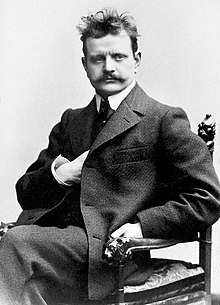
Jean Sibelius, composer (1865 – 1957)

The  Concerto opens with a strong, almost other-worldly presentation that introduces the soloist’s amazing abilities with the relatively small instrument that is able to take the audience immediately into the sky as on a test jet, hum a lullaby, make our heads float on a cloud, and then brings us into a dark forest without a compass. Sibelius is not interested in comfort for the audience or the soloist. A cadenza, an improvisational passage played by the soloist or a written, fancifully decorated passage, usually comes as a climax. Sibelius was not interested in “usually.” A written cadenza is the heart of the first movement, Allegro moderato. The stamp of Virtuoso is pressed into every movement by the soloist. Joshua Bell absorbs the entire score into his physical being. It takes movement to make music, and, at the same time, the music which is created by movements then shapes the movements of the player. It is fascinating to see Mr. Bell express the music with each movement of his back, the hands manipulating the violin and bow, the step forward that happens when the energy of making music changes where the weight is placed in the body, and a foot comes down.
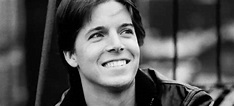
Joshua Bell, violinist       

The second movement, Adagio di molto, is beautiful in a new way that Sibelius found to be beautiful. Sometimes it is the solo violin, sometimes the clarinet and bassoon, and then back to the soloist, a flute, the strings. All is quiet. It is a soft sensation. Was it because the music was soft to hear or was it making a softness the listener will remember as something one could touch or something that touched her? Allegro ma non tanto is the third movement. It has everything. It drives onward, it dances on beats we cannot count, flies and looks like it could crash, but it drives ahead and in spirals. Joshua Bell is unleashed – if there was ever the least restraint – as themes from throughout the Concerto propel this rocket. Sir Donald Tovey, the musicologist, composer, orchestra director, made that comment about a “polonaise for polar bears,” but he did not intend to demean Sibelius’ Violin Concerto at all. He also wrote: “… I have not met a more original, a more masterly, and a more exhilarating work than the Sibelius violin concerto.” The opening night audience, April 27, at Davies appropriately went wild applauding. After perhaps 4 (or 5) curtain calls, Mr. Bell appeared with his violin. He and Wyatt Underhill, the SFS Assistant Concertmaster, played an encore. Mr. Bell announced it as a little tune by Shostakovich. It was an excerpt from Shostakovich’s Five Pieces for Two Violins. It was a lovely, quiet beauty. The audience, giddy from getting an encore, applauded more and longer, but they had to be satisfied by the greatness they had already heard and seen.

In theater, actors are taught to listen to the other characters. One cannot rehearse lines in one’s head; that would set the actor apart from the action. I have a strong image of Mr. Bell waiting for his entries into the music. He is listening. He looks at the conductor. He is hearing it all and ready, completely occupied by the music. One time I saw him quickly pull a hair from his bow. He immediately returned to his focus.

There was a wonderful, silent communication between Dalia Stasevska and Joshua Bell. In one moment while he played, she faced him with her arms reaching out as though saying, “yes, yes, keep on just as you are.” Her gestures while conducting are strong, direct, clear. She shows the strength of her intent in every movement. Ms Stasevska is sought after by many orchestras mostly everywhere. She is the Chief Conductor of Lahti Symphony Orchestra, Artistic Director of the International Sibelius Festival, the Principal Guest Conductor of the BBC Symphony Orchestra. This season she performed with the Chicago, Toronto, Montreal Symphonies, the New York and Los Angeles Philharmonics.
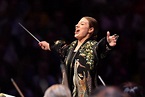
Dalia Stasevska            

The Symphony No. 2 in D minor, Opus 43 (1902) is another example of Sibelius’ grand, intelligent creativity. He wanted an abstract work designed so the music itself produces the music. Elements of the work seem to talk with other aspects of music and time. He supplied no story, no reference to Finnish folklore, and was not now even inspired by Finnish traditions. He stepped into the deep end and came up with something Sibelius that neither he nor others had thought of before. However, art is not always received by the onlooker or listener in the way the creator meant it to be. Finnish musicologists, audiences, and critics heard it as music for their resistance against Tsar Nicholas II. Finland was part of the Russian empire, but the Finns asserted their independence. When it had its premiere, Ilmari Krohn, Finnish critic, called this symphony “our liberation symphony.” Sibelius did not join in that description, but that mark has lasted.
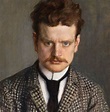
Jean Sibelius

Sibelius’s father passed away when Jean was only 3 years old. He and his mother moved to his widowed, maternal grandmother’s home. He was fortunate that he had a paternal uncle who was interested in music and gave him a violin at age 10. An aunt taught him to play the piano, but the violin was his first love. He and his brother and sister would play trios. Jean started composing short pieces and recorded them on paper. In 1883, on the subject of composing, he wrote, “They (his compositions) are rather poor, but it is nice to have something to do on a rainy day.” He was 18 at that time. When his Symphony No. 2 was premiered he wrote that “My Second Symphony is a confession of the soul.” The Symphony’s four movements all seem to grow from the first movement, Allegretto. it is like a family of four; they are not alike but one can see/hear their origins. The second movement, Tempo andante ma rubato, is totally different than the activity and continuous movement of the Allegretto. The SF Symphony was powerful, as inspired by Sibelius and led by Conductor Stasevska. The SFS never ran off the tracks though it moved through the different directions and meters like a train running in the air. The Andante was suddenly heart-rending, quiet, and full of longing. The last two movements, Vivacissimo–lento e soave and Allegro moderato bring all the passengers together, joined in a new reality. The music is the creator, peacemaker, and promise. The Finnish audiences were thrilled in 1902 just as we are in 2023. Their critics wrote it “exceeded even the boldest expectations,” Oskar Merikanto, composer. “An absolute masterpiece,” Evert Katila. Nothing less. A spectacular performance.


Marsalis, Tarkiainen, Shostakovich: Great Music@Davies Hall

San Francisco, April 23, 2023, Davies Symphony Hall:  The San Francisco Symphony presented a program of three different kinds of music and demonstrated their ability to excel in all of them. It was an exciting experience: one could not hear any of the stunning music and anticipate what would come next. Guest Conductor Cristian Macelaru showed us his understanding of great music originating in America, Lapland/Finland, Russia. He was a masterful leader letting the music stay in front and have its way. One can see why he is the music director of the Orchestre National de France, chief conductor of the WDR Sinfonieorchester, and music director and conductor of the Cabrillo Festival of Contemporary Music. He lives in music, a universal language.

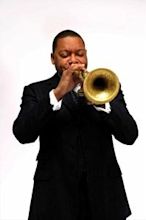
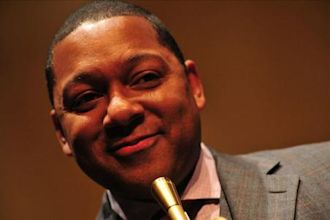
Wynton Marsalis, composer, musician, educator

Two movements from Wynton Marsalis’ Blues Symphony opened the program. They were terrific: complicated, fun, exciting, thrilling, sophisticated music. There is only one problem with the performance: where are the other five movements? Great as the two we got to hear are, it made me ready for the entire Blues Symphony, and soon. The Blues Symphony premiered in 2009, performed by the Atlanta Symphony. This was its first SF Symphony performance. Mr. Marsalis believes that jazz needs to have its history codified. He knows that the music lives across generations and even centuries. Felix Mendelssohn revived Bach. Bach was dismissed as a music “mathematician.” His work was ignored. Thanks to Mendelssohn’s great-aunt, grandmother, father, and his tutor Zelter, all of whom found Bach manuscripts and encouraged 15 year old Felix Mendelssohn.  Then, Felix re-discovered the St. Matthew Passion. After 5 years of preparation, Mendelssohn presented its second debut, 102 years after its first. The link between those composers gave the 21st century the knowledge and beauties of Bach.To give jazz the respect it deserves, and to recognize its contributions to other kinds of music and other cultures, Mr. Marsalis has adopted the continuing and massive effort of delineating jazz history. Styles come and go, but music lasts. Marsalis wants “to further the legacy of George Gershwin, James P. Johnson, Leonard Bernstein, John Lewis, Gunther Schuller, and others.” Musicians and composers know what went before them. They grow through it, make it their own, and keep it alive.

In tonight’s program, presented first was Reconstruction Rag, the third movement of the Blues Symphony.

Wynton Marsalis (born 1961 in New Orleans)

Sean Colonna wrote the program note for this performance. He mentions the elements of jazz at the turn of the 19th century into the 20th: ragtime and the “‘African Mystique’ that fascinated white audiences.” I would add that the fascination for many white audiences was as though the musicians came from another, lesser planet. That’s the “Reconstruction” of it. Remember what happened after the Civil War? African-Americans were placed in situations that robbed them and punished them for their new freedoms. Despite ragtime’s bumptious charm and rhythms, there is a kernel of the blues at the heart of this extraordinary music. There are many layers of sound and rhythm spiraling around the heady, engaging rag. The music that sounds so gay can mislead you into thinking the movement is only about a party except there is more. Big City Breaks, the next movement played, is the fifth movement of the Symphony. It is the embodiment of the sounds and music of New York City especially in the rich Bebop era which produced and fostered so many heroic, creative musicians and composers. There are traffic noises, a police whistle, a lot of percussion. Once again there are layers of sounds interrupting other sounds, tunes, rhythms. So many places to look: across the street, up to the high walls of skyscrapers, people dressed in their finery, people looking out for the bus. Again, there are multiple meanings to the movement’s title; there are all kinds of breaks. I think of break dancing on the streets, I think of the break that comes in a tap dance step, a break that gives one a better job. And someone or something that seeks to break you, your will, and your heart. Therefore, I am impatiently tapping my toe until I get to hear the whole Blues Symphony.

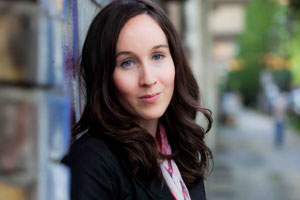
Outi Tarkiainen, composer

This was the US Premiere of Ms Tarkiainen’s beautiful contribution to the concert, Milky Ways, written in 2022. It was commissioned by the SF Symphony. The piece is a concerto for English horn and orchestra. It was entirely new and different in so many ways. She expresses her connection to the natural world and desires that her music involves her audience without ever abandoning the music itself. She is quoted describing the interaction of humans and music, “I see music as a force of nature that can flood over a person and even change entire destinies.” The English horn, played by Russ de Luna, SFS English horn, was called upon to wrap a delicate web around the atmosphere that humans live in. His performance was powerful in its expressive beauty. There are three movements: The Infant Gaze, Interplays, At the Fountainhead of God. As a female composer, she does not dodge defining herself as a female living a life determined by her connection to nature and earth. She had no embarrassment or coverup for talking to the audience about mother milk. The Greeks, she said, observed the sky, saw a vast display of stars, and called it the Milky Way because it is like a long stripe of spilled milk. There is also the other milky way that infants, human and otherwise, experience to nourish them and receive love. The mother and baby dream; the mother wakes to the baby’s face and sees it as a “gift from God.”  Another breakthrough in this music is that for decades if not centuries, women entering lives that had long been available only to men, would surely not want their work to be considered delicate. Ms Tarkiainen’s music is delicate and powerful simultaneously. She has found that strength in gentleness. When the lights on the stage turned down, and there was no light but over each music stand, Mr. de Luna slowly walked on a diagonal line from center to upstage left and off. The music captures the audience through sound and live image. A brilliant premiere. The SF Symphony performed with grace and strength.

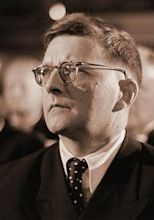
Dmitri Shostakovich, composer (1906 – 1975)
Symphony No. 1 in F minor, Opus, 10. This listener had never heard Symphony No. 1 before this presentation. It allows a brief reverie wondering about the Shostakovich who had not yet been persecuted by Stalin and his vicious toadies. This symphony was written in 1925. He wrote it as his graduation project for the Leningrad Conservatory, in Leningrad/St. Petersburg. Russia. He was, however, already Shostakovich. Symphony No. 1 was premiered in public, in Leningrad, a year later, after it helped him pass his exams. It was a hit. He received immediate recognition as an artist whose work would be allowed to tour outside of the Soviet Union. This led to a performance with the Berlin Philharmonic, led by Bruno Walter, 1927, and, ultimately to the Philadelphia Orchestra conducted by Leopold Stokowski, 1928. The music is magnificent; there is no need to dwell on the composer’s youth. The orchestration allows solos for the violin, cello, and piano. It becomes personal, reaching from the instruments to the audience directly, as though the composer sets these musicians apart to carry a message. These solo moments were performed with virtuoso skill and heart by the SF Symphony artists. The four movements have purposefully chaotic moments, the Shostakovich irony and hint of sarcasm, and bright, energetic passages that beg the orchestra to go ahead and dance. Shostakovich’s individualistic eye cannot help but express his environment, a world in tatters, a yearning for hope to exist. He knew his world. In retrospect, he is almost prophetic of what lies ahead. This is not the Symphony of a beginner in life or art.

Jean-Yves Thibaudet & Debussy

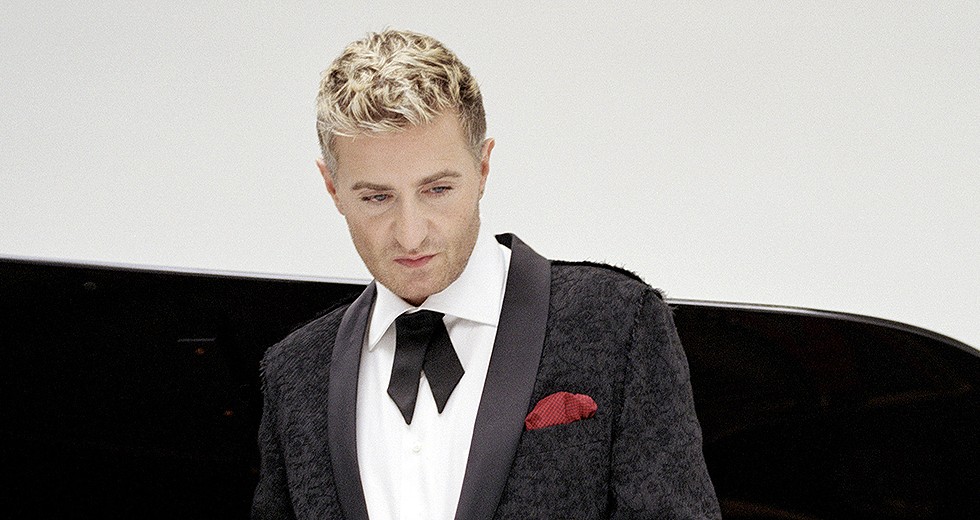
Sunday, March 26, Davies Symphony Hall, San Francisco:  Jean-Yves Thibaudet performed Claude Debussy’s Preludes, Books 1 and 2 and blew the minds of everyone in the hall. These Debussy works are seldom heard all together. Maybe some extraordinary pianist would perform the Preludes of one of the Books or possibly one or a few of the Preludes, but who would or could perform all of them? So far as I know, only M. Thibaudet. The Preludes are works for solo piano. Each “Book” has 12 of them. Not one of them is like any of the others, except for their miniature form: each is between two and four minutes long.

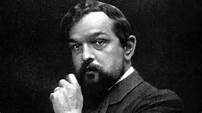
Claude Debussy, composer (1862 – 1918)

These pieces are not the prelude to something else; they may be brief, but each one is a world in itself. Frederic Chopin wrote 24 Preludes but they did not have names or descriptions. Debussy’s are written with each one having a descriptive word according to its meter or mood. The first one of Book 1 is “Lent et grave,” slow and serious. However, Debussy also gives each one a descriptive title that appears at the end of each prelude. In the first one of Book 1 it is “Danseuses de Delphes,” The Dancers of Delphi. Another one in Book 1, the third prelude, has Anime as its traditional heading: Animated. The descriptive name at the end: “Le Vent dans le plaine/suspend son haleine;” “The wind over the plain/Holds its breath.” This is one of the literary quotations or references that appear in the Preludes. The phrase may be from Charles Simon-Favart, an 18th century composer and playwright. Later, the French poet Paul Verlaine used it as a heading for his poem, “L’extase langoureuse.” In 1874. Debussy had made a song of Verlaine’s poem. These artists are in tune with their culture, whether it is the culture of a century ago or current.

Jean-Ives Thibaudet, French pianist who lives in Los Angeles

Capricieux et leger, the 11th Prelude of Book 1, also has the title, “La Danse de Puck.” The Puck of Shakespeare’s A Midsummer Night’s Dream is a playful jokester. The music of this Prelude has the liveliness of Puck’s flying and jumping and his occasionally trouble-making character. Debussy loved Shakespeare and was also an anglophile. In Book 2, the 9th Prelude is Grave, Hommage a S. Pickwick, Esq. P.P.M.P.C.. It honors Samuel Pickwick from Charles Dickens’s first book, The Pickwick Papers. 

M. Thibaudet always dresses elegantly. This time, he appeared in black. From where I was sitting I saw him well but may have missed details, except for his shoes. I could see the bright bar across the top of his foot. I mention this because it drew my eye to his feet. In the program notes, James M. Keller quotes composer Alfredo Casella, a Debussy contemporary, who also took note of Debussy’s feet: “Moreover, he used the pedals in a way all his own.” I am convinced that M. Thibaudet did so, too. Most of the time, I could see only the downstage foot (the foot closest to the audience). The upstage foot must have been exactly parallel and doing its own pedal thing.

Here is more from Alfredo Casella on Debussy’s playing: “…his sensibility of touch was incomparable; he made the impression of playing directly on the strings of the instrument with no intermediate mechanism; the effect was a miracle of poetry.”

This is an apt description of M. Thibaudet’s playing as well.

While it is entertaining to glance through the traditional citations and names like “Modere (Brouillards) Moderate…Mists, it would be a terrible mistake to disregard the beauty and difficulty of the music. No one in the audience could fail to realize the magnificence of M. Thibaudet’s performance. It was literally stunning to watch and listen. Each Prelude has its own meter, a special tone, a unique set of technical challenges. The pianist does not have a through-line of theme or color or emotion. The Preludes are a celebration of the particular. Attention to the most challenging individual elements of the pianist’s technique cannot waver. It is more intense and requires more precision than an Olympic Decathlon and probably as much strength and energy.

Jean-Yves Thibaudet performed something that maybe no one since Debussy himself has done, or done so well. He took the challenge of performing both Books and embraced the vast variety and individual beauties of the Preludes. It could be compared to tight rope walking between two high rise buildings while playing master level chess. The audience cheered and applauded for at least 5 curtain calls. M. Thibaudet succumbed to the audience’s raptures and played Sir Edward Elgar’s Salut d’Amour as his encore. It was a salute to the program’s complexity, charm, originality, and earth-moving beauty. The audience called M. Thibaudet back for another 4 or 5 chances to applaud him before everyone reluctantly realized the music was over for this night.

Jean-Ives Thibaudet will perform the solo program of Debussy’s Preludes throughout the US and Europe this year. He also will appear in recital with Renee Fleming and will tour in the US and Japan with Midori. In addition, he will perform with Itzhak Perlman and Friends in New York City, Michigan, Toronto. The French Ministry of Culture awarded him the title, Officier, in 2012. He is a great artist; don’t miss him.


Hilary Hahn and J.S. Bach

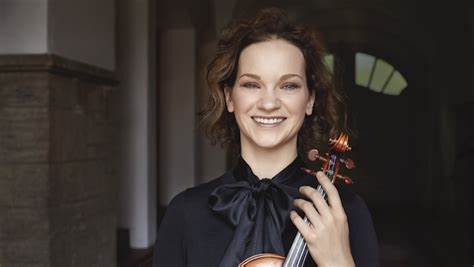
Hilary Hahn’s solo recital on March 12 was truly great. The word astonishing fits except that it is not a surprise when Ms Hahn performs in a way that combines flawless technique with emotion, color, and devotion to the music. While hearing her play three of Johann Sebastian Bach’s works for solo violin, I knew that this was pure Bach. There is no ego or personal style filtering the music. The music did not need such additions; it was exciting, an on-the-edge-of- the-seat experience. It was pure music.

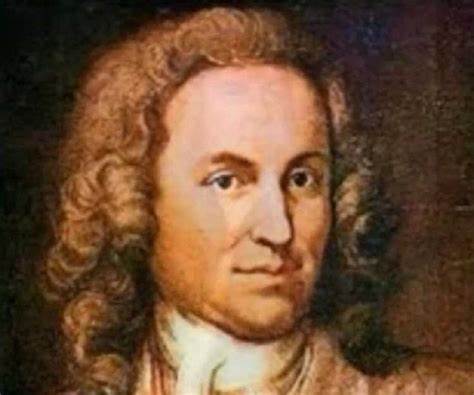
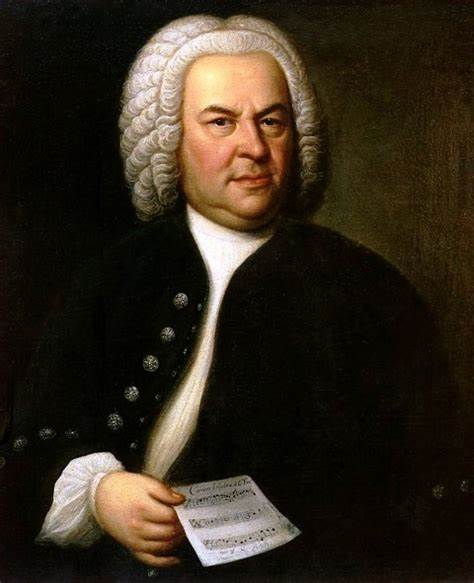
Johann Sebastian Bach (1685-1750)
The program offered Sonata No. 1 in G minor, BWV 1001; Partita No. 1 in B minor, BWV, 1002; and, after intermission, Partita No. 2 in D minor, BWV 1004.

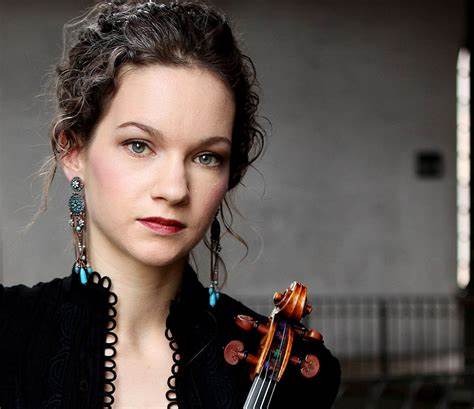
Hilary Hahn, Violinist

Purity does not mean that it was simple. Every note, every multiple note created a world of sound. Sound is a real, physical thing. It can change the world around it. Sound can move mountains; consider an avalanche.

The Sonata No. 1 in G minor is listed first of Bach’s six works for solo violin. Its parts are Adagio, Fuga: Allegro, Siciliano, Presto. The order of Slow, Fast, Slow, Fast is intentional. It balances classical order with the interweaving of free imagination and openmindedness. There is a mathematical intelligence at play. My college roommate, Leah Johnson Wilcox, was a math major. I knew she knew games of balance and dimensions and that I would never be able to play on that field. Ms Hahn’s superb intelligence is a wonderful match with Bach’s. Together, they explore balance, space, rhythms; they play with time and space. The listener is joyfully immersed in the mathematics of music without really knowing it is happening.

The Partitas have movements named for dances. The Siciliano in Sonata No. 1 is the only dance character in the Sonatas. Baroque dances were crazy complicated in their patterning of order. Partita No. 1 in B minor opens with an Allemande, and then its Double; next comes a Courante and its Double: Presto; Sarabande, and its Double; Tempo di Borea (Bourree) – and its Double. The Double is an ancestor of a jazz variation; it spins out something new from a standard. Here, the music takes off from the musical idea of the dance movement first presented. The rhythms and characters of the dances go beyond a restatement of a physical, 18thc. dance. The music tells us the DNA of a Courante’s running motion or the Sarabande’s dignity and sadness. It is not only the heart of the music in motion; it exposes Bach’s understanding of the electrical pulses and chemical interactions that keep it alive.

Restraint can be beautiful. Order can breathe. These violin solo works are not embroidered or showing off innovation. They combine profound creativity with their classic forms.

There were moments in the recital when I am certain I heard Bach speak. Did Bach invent music? I know that is not true, not entirely true. It only seems that way sometimes. There are not adequate ways to describe Ms Hahn’s greatness. Standing alone on an empty stage, she filled the stage and Davies Hall with her presence and her powerful connection to the music she made.

The Partita No. 2 in G minor shares its format with Partita No. 1 but its Fate led it somewhere else. This one has no Doubles, but it does have five movements: Allemande, Courante, Sarabande, Gigue, and Chaconne. The mood of the first four movements is tinged with reflection, controlled order; if we were to use Romantic thoughts we might find regret. The Gigue (Jig) takes rhythm over the mountain, dancing with wild energy which takes the rhythmic demands farther than one could expect, and even farther than that. And then, there is the Chaconne. It is very long, so long as the all the first four movements together. It gives us a theme and then sixty-four variations. I do not remember breathing as I heard this majestic music. It gathers the knowledge of music’s world and, in the last two strokes of the bow, made my heart stop in awe.

For more about Ms Hahn, please see the article at http://www.livelyfoundation.org/wordpress/?p=1359   about her Davies Hall recital on April 26, 2016, with Cory Smythe, pianist. The program included work by Mozart, Bach, Aaron Copland, and Tina Davidson’s Blue Curve of the Earth, the winner of a competition for new encore pieces sponsored by Ms Hahn.


Joshua Bell & Peter Dugan@Davies Symphony Hall: SIMPLY GREAT


Violinist Joshua Bell’s recital at SF Symphony’s Davies Hall, Sunday, December 11, was astounding. With pianist Peter Dugan, Mr. Bell gave us the musical equivalent of a home run with the bases loaded. It was a stunning performance from every perspective: the program selections, the perfection of sound, the integration of violin and piano, the physical presence of Mr. Bell. What have I left out? If there is something missing from that list it is only because I am still envisioning the performance, and it is still breathtaking.

Ludwig Van Beethoven ( 1770-1827)

Since he is so well known, one might imagine the program Mr. Bell would perform would be familiar; instead he presented works that neither I nor the Hedgehog pianist and bass baritone knew. The opening work was a brilliant curtain raiser: Beethoven’s Violin Sonata No. 2 in A Major, Opus 12, no. 2. It was composed in 1797 or 1798 and published in January, 1799. It was a daring, innovative composition. The two instruments are equally featured and truly “play well together,” as a school report sent home might declare. Mr. Bell’s physical movements express the music and also gave him opportunities to turn toward the pianist and physically, visibly demonstrate their relationship. They were not playing the same notes or rhythm but interlacing each instrument’s music to make the music of the sonata. It was a delightful work from the engaging beginning to the middle section’s nostalgic, nearly despairing sound, and the final Allegro suggesting all is well — for the moment.

Pianist Peter Dugan


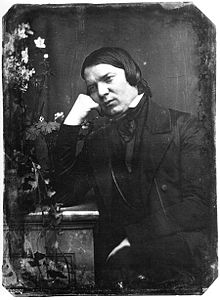
Robert Schumann (1810-1856)

Robert Schumann’s Sonata No. 2 in D minor, Opus 121 is a hurricane of sound, a stage 4 emotional storm. While the music could be said to crash like the ocean under the hurricane, the composer does not lose his way with his creation. He is in control of his ship. Schumann composed it in 1851, a year of tremendous productivity. He completed 18 works in that year, reworked his Symphony No. 4, plus three overtures, a piano trio, works for piano and violin, lieders; it is an amazing year. Early in 1854, he attempted suicide by jumping into the Rhine. He died in 1856, in an asylum in Bonn. Fortunately for him and us, he was able to create great works before the internal storms incapacitated him. This work also was a new sound for the Hedgehogs. It kept the audience leaning forward, awaiting the next tumult. Despite my descriptions of the Sonata as a hurricane, the work is not a single dimension. There is a graceful lyricism in the first movement and the third, Andante, has a touch of happiness. In all, the Sonata ends by turning toward a hopeful moment. This is an extraordinary way to experience Schumann’s depth.

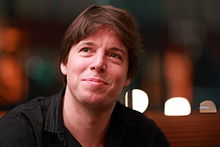
Joshua Bell

The page for this recital in the program book shows in very small print, “Additional works will be announced from the stage.” Just seeing that one line created a thrill of expectation. In the second half of the performance, the personable, at ease Mr. Bell shone as he took a microphone to introduce the next pieces. It was remarkable to see his relaxed personality apparently talking with each person in the audience though he was talking to thousands of us.

Claude Debussy (1862-1918

The second half was to begin with Claude Debussy’s Violin Sonata in G minor (1917). It was another splendid selection which I do not think I had ever heard. I am grateful to Mr. Bell for choosing it. Debussy was suffering terminal cancer when he wrote it. He worked on it in 1916, put it aside, and finished it in 1917. It is a culmination of the beauties that one hears in Debussy’s music. It demonstrates how strong and lasting something transparent, light, and gentle can be. It could be light in terms of weight but also music as light; it is a real thing which one cannot ever touch. Debussy performed its premiere in Paris, May, 1917, and passed away less than a year later. Although the Debussy was the only work listed for the second half, Mr. Bell and Mr. Dugan actually began with Nigun from Baal Schem Suite by Ernst Bloch. When he introduced the piece, Mr. Bell noted that  Bloch was Jewish and, since Chanukah was only a week away, he was proud to present it. He paused exactly the right number of moments and then commented that Ye probably was not in the audience. Albert Camus reflected on the political essence of art; it was a completely justifiable addition to the Joshua Bell and Peter Dugan performance. The music was stunning; original and also embodying tradition, ways of living, ways of surviving. Nigun is said to be a pleading with heaven; Bell and Dugan achieved the effect of reaching deeply into one’s being. Bloch was Swiss, came to the US in 1916, became the Music Director of the Cleveland Institute of Music, then the Director of the San Francisco Conservatory of Music, and joined the faculty of UC, Berkeley. This Nigun was a marvelous reunion of Bloch and the Bay Area.

Bela Bartok (1881-1945)

One more addition to the program was Bartok’s Rhapsody No. 1. None of these additions were brief or light weight. The Bartok work and the Bloch and the Debussy all existed in different worlds of sound, rhythm, emotion. As one might expect the Bartok piece activated the strange music of the Romanian/Hungarian folk tunes and dances, but that does not mean that the music was as expected. Each section was diverse within the whole and each section had the wild heart of the villages stirring souls and hearing this wildness. Both musicians became completely someone else in each of these remarkable, peak performances. It was an amazing thing to see as well as to hear: a transformation and a musical life in perhaps ten minutes.

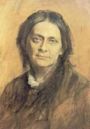
Clara Schumann (1819-1896)

Those pieces were considered part of the program. Then, there were the encores! We all must find out what Joshua Bell eats for breakfast and whether he and Peter Dugan prefer running or swimming. The focus of the performers and their energy was amazing. The first encore was Clara Schumann’s Romance #1. Clara Wieck Schumann, married to Robert Schumann with whom she had nine children, was recognized as the finest pianist in Europe. They fell in love when very young. Her father did not approve, but they married. This Romance is one of three, Romances, all fine compositions. This writer has heard it on a cd and on the radio, but it never touched me until hearing it not only live but performed by Bell and Dugan. It is graceful with an underlying power; the performance was eye opening, reminding the listener what Clara Schumann, who toured her performances across Europe, could do if she had had more time to write.

Scherzo-Tarantella by Henryk Wieniawski was the opposite of Clara Schumann’s Romance#1. This was fast and then even faster. It was a mad dance taking its name from the motions of one bitten by a tarantula. Another fantastic, seldom if ever heard piece, this one sent the giddy audience up to the roof top and down again. After sitting for  a couple of hours, I believe everyone present felt sure in their nerves and blood that they could prance, run, leap for however much time and music they could have. This concert was beautiful, powerful, and world moving.


AMAZING NIGHT AT THE SF SYMPHONY: ESA-PEKKA SALONEN, YUJA WANG, SF SYMPHONY, NEW CONCERTO BY MAGNUS LINDBERG…

The San Francisco Symphony presented an amazing evening of music, October 13, 2022. Esa Pekka Salonen, Music Director, still seems new since the pandemic separated him from his audience. Now that he and the SFS are back performing full seasons, the excitement of his leadership and creativity is nearly tangible in Davies Symphony Hall. The program on the 13th was the premiere of Piano Concerto #3 (2022), by Magnus Lindberg performed with the stunning piano soloist, Yuja Wang. The concert opened with Helios Overture, Opus 17 (1903), blissful music by Carl Nielsen. Bela Bartok’s Concerto for Orchestra (1943, rev. 1945) was the beautiful and mysterious closing event.

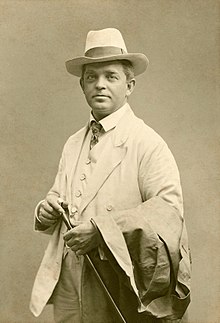
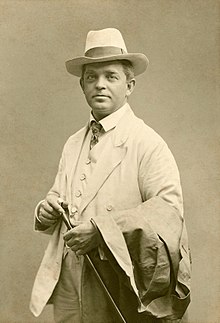
Composer Carl Nielsen

Helios Overture swept the audience away. It is a self-contained, 13 minute, inspired beauty. The SFS performed with conviction and the musicians’ invisible but superb technical prowess. Conductor Esa-Pekka Salonen seemed to breathe in concert with the music by the brilliant Danish composer, Carl Nielsen. We arrived in our seats with only moments to spare. This meant that I did not open the program book and learn that there is a subject to the Overture and that it was the sun. At first, I thought it was the ocean. Nielsen had debated the use of programmatic themes in music. Should there be a suggested story or image? He preferred not. And yet, on a trip to Athens with his wife, the heat and sun enveloped his musical imagination. His note on it in a letter to another Danish composer, Thomas Laub, explains his careful steps to program-light. Pun not intended, but it will stay. “My overture describes the movement of the sun through the heavens from morning to evening, but it is only called Helios and no explanation is necessary. What do you think?” What the audience and this writer thought was “Why do I not already know this music?”  Listening, one feels in touch with the universe, caught up in the power and peace of light. Thinking back to Thursday, I think I heard the audience catch its breath and sigh.

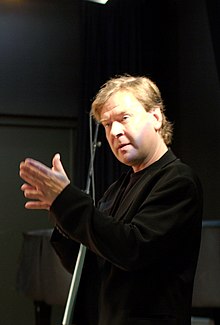
Composer Magnus Lindberg

Magnus Lindberg and Esa-Pekka Salonen are both Finnish, were born only 3 days apart, and were close friends while studying composition in the Sibelius Academy, Helsinki. Mr. Lindberg established a reputation for fine compositions of great complexity. He explores extreme rhythms played on top of one another. In order to make his music continue to raise the bar for  intensely complex sound and timing, he invented computer programs to go beyond what humans perceive on their own. In some ways, the Piano Concerto #3 approaches classical ways, but they are Lindberg’s translation of classical.

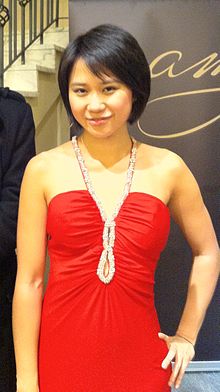
Yuja Wang, Concert Pianist

There is no doubt that his decision to write the Concerto for Yuja Wang to perform was important to the identity of the music. Ms Wang plays the piano with strength. In her performance, it was clear that she was catching all of the directions of the changing and over lapping rhythms. It seemed as though she kept a beat in her head and others in her fast fingers and even in her feet which were dressed in high heel shoes with pom poms on the toes. Yuja Wang presents herself as a devil may care fashionista beauty. She can do that because she is the absolute Ace of pianists. I cannot imagine this Concerto without her. In their onstage conversation after the end of all of the performance, Mr. Lindberg and Ms. Wang offered more descriptions to the audience. They had made edits in the score during their rehearsals. The Piano Concerto #3 could actually be three concerti as each of the three movements are distinct in their sound and structure. It was fascinating, thrilling music performed with the height of musical intelligence. Mr. Lindberg says that the orchestra is his favorite instrument. He certainly uses all of it in every way through unknown dimensions. We need to hear it again!

Composer Bela Bartok, 1927

Bela Bartok’s Concerto for Orchestra has a dramatic “back story.” Bartok was in his native Hungary. The fascist governments in Europe had taken over. He wanted to leave but remained to take care of his mother. When she passed away, 1939, he and his family left for America as soon as possible. He arrived in 1940.  In America he was broke, and his health began to go downhill. He had leukemia. His condition and his poverty meant he had to stay in a hospital. Two of his Hungarian friends, Joseph Szigeti, violinist, and Fritz Reiner, conductor, were also in the US. They urged Serge Koussevitzky, Boston Symphony conductor, to help Bartok, and he did. He offered $1000 as a commission for a new work. Bartok would not accept it as charity, but Koussevitzky was smart. He told Bartok that he had to give him $500 before the piece was written and the other half when a new piece was completed. It worked to put Bartok, now terribly weak, back to work. A concerto for an orchestra may seem a contradiction in terms as the usual concerto singles out one instrument playing solos intermittently, with or against the full orchestra. Bartok structured this work so that many instruments of the orchestra would be featured, often  in “couples.” He employed the sounds and individuality of the bassoons, oboes, flutes, trumpets, clarinets to create the architecture of the music. As one would expect, the final composition is completely his own. Bartok apparently was not a fan of Shostakovich, but the Russian composer was much in favor in the US, in part because of the alliance between Russia and the US. In the fourth movement, Interrupted Intermezzo: Allegretto, what Bartok called “brutal band music which is derided, ridiculed by the orchestra. After the band has gone away, the melody resumes its waltz–only a little bit more sadly than before.” This piece became an enormous success, loved by audiences and musicians. It has five movements and his “night music” appears especially in Elegy, the third movement. This Concerto has a sense of mystery running through it, beautiful music but with a touch of off center, ill at ease uncertainty. The journey through all the movements ends with an uplifting, positive feeling of celebration. The audience at the premiere cheered him. According to Bartok, Koussevitzky said it was “‘the best orchestra piece of the last 25 years.'” The music is pure magic.


Esa-Pekka Salonen & SF Symphony: Explore, Disrupt, Create

The San Francisco Symphony’s audience had an exciting encounter with Music Director Designate Esa-Pekka Salonen on Thursday, February 27. The program included Beethoven’s Overture to King Stephen, Opus 117 (1811); Salonen’s own Violin Concerto (2009); Carl Nielsen’s Symphony No. 5, Opus 50 (1922). Repeated on the 28th and 29th, the program presented three big works each of which had muscular qualities that shook up classical expectations.

Ludwig Van Beethoven (1770-1827)

Beethoven wrote Overture to King Stephen for a play by a German playwright, August von Kotzbue. The playwright was also a lawyer and journalist who was assassinated by a theology student who accused him of being a spy for the Russians. King Stephen is considered the founder of modern Hungary, late 10th to early 11th century. The reader may be excused if unfamiliar with the play; it is known mostly for what Beethoven created for it. It is an unusual piece of music. There are dramatic, long rests. There are themes that grow from Hungarian dances. There is intriguing syncopation, a rhythmic motivation for Hungarian dance. In addition to being completely different all on its own, Overture to King Stephen, written more than ten years before the Ninth Symphony, seems to offer musical predictions of what will come. There is even a theme suggestive of the Ode to Joy.  Like the other selections on the program and befitting for the Overture of a play, this work presents a sense of drama that captures the imagination.

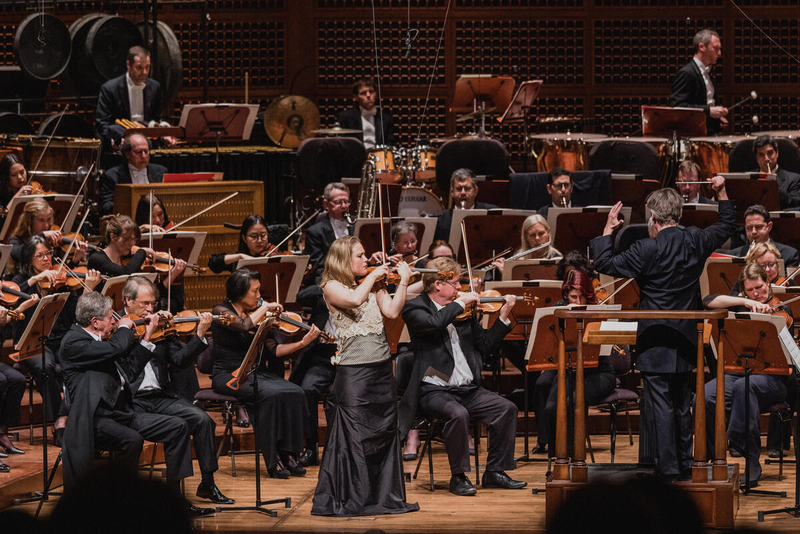
Violinist Leila Josefowicz performs Esa-Pekka Salonen’s Violin Concerto with the San Francisco Symphony and Salonen conducting, February 27, 2020 at Davies Symphony Hall

Maestro Salonen composed his Violin Concerto for Ms Leila Josefowicz. A much honored artist, to say she is a dynamic performer is an understatement. The Concerto begins with nearly violent bowing which quickly repeats many times the same sounds. The qualities expressed by the work shift from orchestra section to section, sometimes led by the orchestra and sometimes by the violin, but the violin still dominates. In addition to being a master work for orchestra and soloist, it is an Olympic event of the physicality of making music. In its slow movement, the colors flow through the orchestra while a timpani insists on maintaining its beat. “I decided to cover as wide a range of expression as I could imagine over the four movements of the concerto: from the virtuosic and flashy to the aggressive and brutal, from the meditative and static to the nostalgic and autumnal,” says Esa-Pekka Salonen of his Violin Concerto. Surely its energy punches the music forward. There is a barely restrained explosion which is anticipated but still shocks with its sudden presence. Salonen’s Concerto is disruptive of form and style. Written for the classical orchestra, it takes the possible sounds, shakes them, steps out of line, and makes its own dance. It is not a shy, introspective dance. It is out there, in the open, daring but not especially caring if anyone else takes the dare. The San Francisco Symphony seemed to revel in it.

Carl Nielsen (1865-1931)

Danish composer Carl Nielsen began life in a large, poor family. He discovered music on his own at age three. He found that he could get different pitches from the sticks in the woodpile depending on their length and thickness. Throughout his life, he explored music from its most basic sources to the grandeur of his symphonies. A scholarship to the Copenhagen  Conservatory to study piano and violin began his understanding of music theory. He supported himself by performing violin and conducting in orchestras in the Tivoli Gardens, the Royal Chapel, the Royal Theater, Copenhagen Music Society, and Music Society Orchestra in Gothenburg, Sweden. His Symphony No. 5 is fantastically interesting and also dramatic. At first the music is anxious, and the anxiety is contagious to those who listen. The adagio is sensual and creamy. It is dangerous to get caught up in the adagio because the timpani will interrupt. In Nielsen’s symphonies there is a feeling of the confrontation of different poles, different energies combat for space. There may be a peace negotiation, but neither side will give in. A gift to his audience: after the changes of key alter our focus, the music rewards us by nodding, “yes.”

This was a triumphant program for both the SFS and its future Music Director. Watching them work together is thrilling.

Photo of San Francisco Symphony, Leila Josefowicz, Esa-Pekka Salonen conducting by Brandon Patoc, courtesy of the San Francisco Symphony.

SF Symphony & Michael Tilson Thomas: BRILLIANT!

The San Francisco Symphony started the New Year and their music director Michael Tilson Thomas’s 25th and final year with a brilliant concert. The ovations given to MTT promise that his devoted audience will not let him go easily. Among his many gifts, Maestro MTT is a magician of the art of program design. January 5 – 12, SFS and MTT presented Overture to Benvenuto Cellini, Opus 23, (1837) by Hector Berlioz; Meditations on Rilke (2019), by Michael Tilson Thomas; selections from Des Knaben Wunderhorn (1892-1898), by Gustav Mahler; and La Valse (1920), by Maurice Ravel. Each work was performed with zest, deep feeling, flawless musicianship. There was a distant but worthy relationship between Meditations on Rilke and Des Knaben Wunderhorn that increased the audience’s appreciation of both. Do you have a great-uncle who is related only by marriage to someone who is your great-aunt living in another state, but you are crazy about him? It’s that kind of relation.

Hector Berlioz (1801-1869) French

The Overture to Benvenuto Cellini premiered in Paris, in 1838. The Overture was a hit, but the opera for which it was written was not. The story goes that all composers wanted to have their music performed there; regrettably, performances there were famous for being sloppy and under rehearsed. “The Overture was extravagantly applauded,” wrote Berlioz, “the rest was hissed with exemplary precision.” What a grand disappointment! The Overture in the SFS’s rousing performance on January 12 was full of musical interest from gorgeous melodies to a lively allegro. There is a melody for the woodwinds that represents Harlequin at a carnival. In fact, the Overture has so much character and rhythmic variation that it could be heard as a compact opera in itself. Far from a lightweight curtain opener for the evening, this Overture deserves the fine performance it received. Hearing it again will reward the listener with more insight to its structure and colors and great enjoyment.

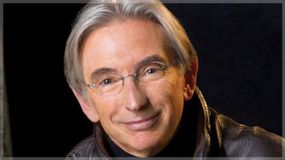
Michael Tilson Thomas (born December, 1944) American, born in California

MTT has composed other works in which a text is the inspiration or accompaniment for the music. These include Three Songs to Poems by Walt Whitman (1999); Poems of Emily Dickinson (2002); and From the Diary of Anne Frank (2018) for narrator and orchestra. The premiere performances of Meditations on Rilke at Davies Symphony Hall, Jan. 5 -12, created a great event. In addition to the SFS, mezzo-soprano, Sasha Cooke, and bass-baritone, Ryan McKinny embodied the Rilke poetry which became exciting and lovely songs as MTT created them. The singers were a great pair for these songs. The composer-conductor tells that these songs came about by reflecting on events in his father’s life. A fine pianist, his father and friends got stuck without money in Oatman, AZ. His father filled the cafe-bar’s need for a piano player. His playing merged classical works, Gershwin and Irving Berlin songs with performances of requests such as the Bear Fat Fling. It is not 100% clear how that experience in the 1930s relates to MTT’s choice of poems by Rilke for his new songs, except that the Rilke works do resonate with sounds originating in contemporary classical music, maybe a bit of Mahler, perhaps a reference to Schubert, but over all Michael Tilson Thomas. This work was a huge favorite with the audience and has dazzling musical complexities woven in among the moods and melodies that unite it.

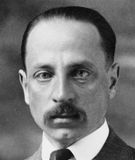
Rainier Maria Rilke (1875-1926)Bohemian (Czech)-Austrian

Rainier Maria Rilke is read by some to be a mystic and by others to be an existentialist poet trying to find peace in a time of anxiety and isolation. His work is lyrical and searching, such a fitting partner to MTT’s music. His consolation for his readers was “Be patient toward all that is unsolved in your heart and try to learn to love the questions.” The San Francisco Symphony promises the release of recordings of this and other MTT music later this year.

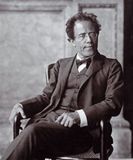
Gustav Mahler (1860-1911) born in Bohemia (now Czech Republic)

Four Songs from Des Knaben Wunderhorn provided a brief but satisfying venture into Mahler-land, a destination MTT has made his own. Sasha Cooke returned to sing the folk song styled works from a collection that was published in 1805. The Romantic movement embraced the music and stories of national or ethnic origins, even when it was written and arranged anew. The four songs performed by the SFS and Ms Cooke expressed the trials of living in the country, loss of love and loss of life. The songs might begin with a cheerful outlook but also  were somber and alluded to barely hidden sadness. Ms Cooke delved into these emotions with understanding and appreciation for both the lyrics and the wonderful music. It was a performance revealing a root of the Romantic experience of life.

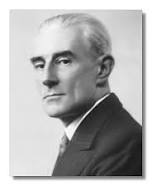
Maurice Ravel (1875-1937) French

La Valse, poeme choregraphique pour orchestre is such a fabulous, swirling piece that the listener feels as though she has been lifted up, repeatedly turned fast in the air, and, before long, danced so quickly and become so dizzy that she sails through the air forgetting that eventually she will fall. It is an emphatic, ever growing dance that dances itself. The room spins, but the dance does not care. Ravel originally planned a tribute to Johann Strauss. By 1920, after World War I and the destruction of much of a generation, the gracious image of waltzing was no more. The sound of this work becomes a terror. The ballroom where it takes place seems haunted by evil. It is a piece of music not to be missed, especially if the listener is willing to imagine himself in that scene and, by doing that, understand better the cost of war. Bravo, Ravel! Bravo, San Francisco Symphony!

YEFIM BRONFMAN & SF SYMPHONY PLAY PROKOFIEV

On June 22, the Hedgehogs were in the audience for the powerful performance of Prokofiev’s Concerto No. 2 in G minor for Piano, Opus 16. It was a privilege to be there. Yefim Bronfman, the pianist, is surely one of the greatest pianists. His mastery of this Concerto reveals his mastery of Prokofiev’s music and of the art of the piano. Prokofiev’s Concerto No. 2 is demanding on every level: technique, emotion, physical abilities. Bronfman triumphs

Yefim Bronfman

in every category with magnificent partnership of the SF Symphony. Bronfman made the challenges of playing this grand, gorgeous, overwhelming music seem to come to him naturally. He breathes the music and the Davies Symphony Hall audience was captivated as he led them on an enormous journey. Mr. Bronfman will continue touring through the US and abroad this summer. If you are anywhere near one of his concerts, go. Do not miss his performances. Everyone who loves music will talk about the experience forever.

The composer, Sergei Prokofiev, found this concerto’s piano solo difficult to play. It is said that he complained of how hard it was for him to learn and perform. Prokofiev won first prize in piano from the St. Petersburg Conservatory so his opinion of playing his creation must be accepted. The Concerto No. 2 is the second in more than one way. His first composition of it was lost in a fire, in 1918. Not yet published, the concerto was lost. Prokofiev had fled the revolution in Russia and gone to Paris. In 1923-1924, he reconstructed it from notes and added new music. The concerto is melodic, suggests dances, machine sounds, and, in the third movement, even sounds threatening. Throughout, the meter changes grabbing the audience’s attention to a piano that is played almost faster than one can listen. It is a giant, life journey.

Yefim Bronfman was born in Tashkent, in Central Asia, a former part of the Soviet Union. He and his family immigrated to Israel where he studied piano with Arie Vardi, head of the Rubin Academy of Music, Tel Aviv University. Moving to the US, he studied at the Juilliard and Marlboro Schools of Music and at the Curtis Institute of Music. His teachers were Rudolf Firkusny, Leon Fleisher, and Rudolf Serkin. He became an American citizen, in 1989. Among his honors: he won the Avery Fisher Prize, 1991. He has been nominated for 6 Grammy Awards and won in 1997 for a recording of the three Bartok piano concertos with Esa-Pekka Salonen and the Los Angeles Philharmonic.

Also on this program were Fratres for Strings and Percussion by Arvo Part, Music for Ensemble and Orchestra by Steve Reich, and Polovtsian Dances by Alexander Borodin.

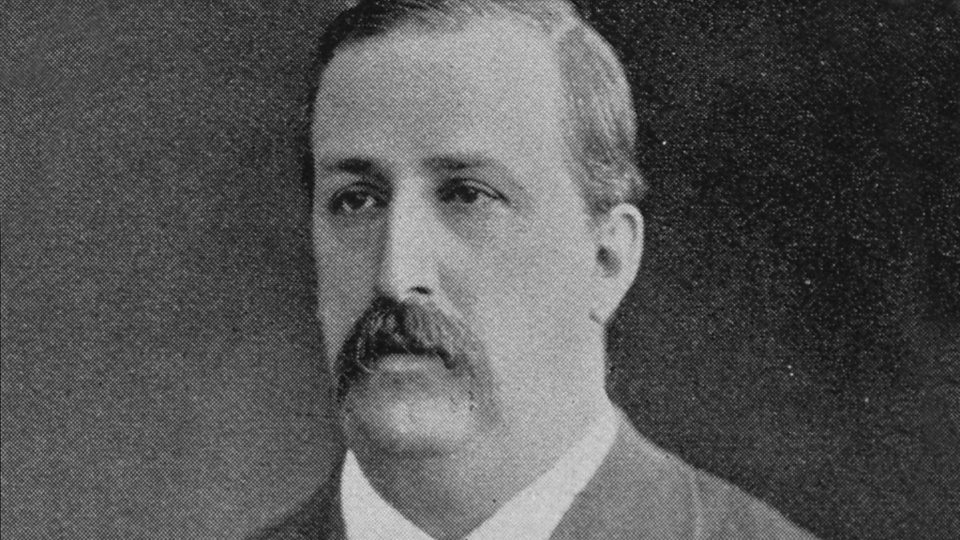
Alexander Borodin

The SF Symphony’s performance of the Polovtsian Dances was beautiful as the SFS captured the exquisite, dancing music and enchanting, exotic folkoric sounds. Just when the listener comes close to being lulled into a dream, the 12th century military campaign of Prince Igor against the Polovtsian tribe re-enters with force and  passion. Bravo, Borodin!

Esa-Pekka Salonen Debuts as Newly Named Director SF Symphony

A completely full house at Davies Symphony Hall, January 19, 2019, greeted Esa-Pekka Salonen with applause and cheers before he even reached the podium. This was his first performance with the San Francisco Symphony after being named Michael Tilson Thomas’ successor as Music Director of the SFS. Although he had led the orchestra previously, there was a feeling in the house that this was something different, a time to listen and watch intently for hints of what is ahead for San Francisco.

Esa-Pekka Salonen addressing the SF audience at the Sound Box

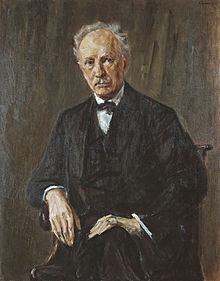
The program featured Also sprach Zarathustra, by Richard Strauss (1896) and Four Legends from the Kalevala, by Jean Sibelius (1896). The West Coast Premiere of Metacosmos Anna Thorvaldsdottir (2017) opened the concert.

Richard Strauss

Also sprach Zarathustra (Thus Spoke Zarathustra) is familiar to many as the theme music of the movie, 2001: A Space Odyssey which opened in 1968. Being the theme of a hugely popular movie has pluses and minuses. On the plus side is the immense, world wide audience now exposed to the music. On the possibly negative side is the permanent association of the movie and the music making it difficult to think of one without the other. 2001, tragically, now has other associations, as does 1968, a year of war, assassinations, political turmoil. The SF Symphony’s performance of the thrilling music was so effective that the audience was totally involved and could not have pondered anything else. R. Strauss took a work by Friedrich Nietzsche as his inspiration for the music. Nietzsche had as his inspiration Zarathustra, a Persian philosopher from the 6th century B.C.E.  After isolating himself from society, Zarathustra sees a sunrise and realizes he must rejoin his world. R. Strauss wrote that he intended his music to transmit “the evolution of the human race from its origin.” It is a roller coaster ride from the stratosphere to Earth and back again. If this is humanity, it has endless pitfalls and triumphs and mysteries. This is music that should be experienced as the SF Symphony played it, no movie required, lifting the listeners, opening their eyes as they let go of the safety rail and ride.

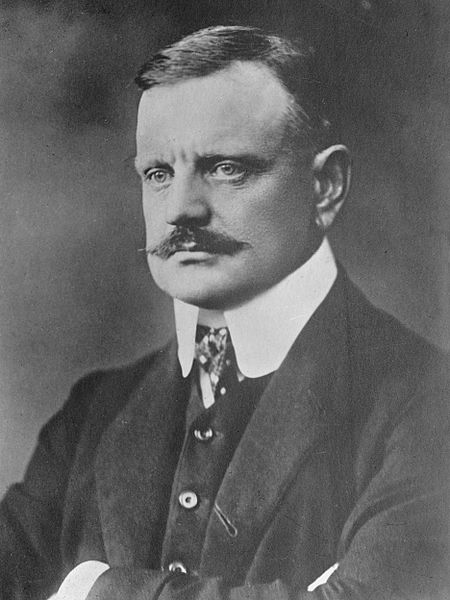
Jean Sibelius, 1913

Four Legends from the Kalevala is a suite of pieces representing episodes in the Finnish epic story. A young man, Lemminkainen, has fabulous adventures as he hunts, finds love, battles, and defies death. Each episode has a different character and sound: Lemminkainen and the Maidens of the Island; Lemminkainen in Tuonela; The Swan of Tuonela; Lemminkainen’s Return. The writing creates a deeply colored and emotional atmosphere more than representing specific narrative actions. The encounter with the Maidens of the Island begins with an announcement suitable to opening the entire suite and ends with carefree, sensuous dancing. In Tuonela, Lemminkainen begins his quest to kill the Swan of Tuonela but is killed himself instead. In the Finnish myths, Tuonela is death’s habitat. As in many epics, the hero has a polar opposite, a blind cowherd who manages to overcome the hero. Lemminkainen’s mother finds her son’s body and is able to bring him back to life. The tension in this movement comes forth in intense harmony that leads to the music of a solo cello. In the epic, the Swan of Tuonela swims in dark water of a large river. The Swan sings. The music in this movement is exquisite and strange. The string sections are composed in 13 different parts on top of each other and from that complex, but unified sound comes the voice of a solo English horn. It is eerily beautiful. The Journey home unifies the different aspects of the music and introduces a rondo which brings all the adventures together. The work demands and richly rewards attention. This was an extraordinary performance by the SFS. The musicians played themselves into the mysterious world of the Kalevala giving their audience a superb, personal experience of a distant world. The audience stood, applauding for the Music Director designate to return for more bows. This event promises a close creative partnership of orchestra, conductor, and audience.

For more on Sibelius’ Swan of Tuonela, see post on Michael Tilson Thomas and the San Francisco Symphony at    livelyfoundation.org/wordpress/?p=1073