Davies Symphony Hall, San Francisco, March 28, 2026 – The composers, conductors, and soloists were French. The program of Claude Debussy, Camille Saint-Saens, Hector Berlioz was thrilling. The conductor, Philippe Jordan, has served as music director of the Vienna State Opera, music director of Opera National de Paris, chief conductor of Vienna Symphony and principal guest conductor at the Berlin State Opera. In 2027-2028, he will become the music director of Orchestre National de France. The titles could not be more impressive, and seeing and hearing him conduct the San Francisco Symphony, he was truly a great conductor. Some performances will be called “unforgettable.” I do not want to forget anything about this concert.
I hope to remember Jean-Yves Thibaudet playing Camille Saint-Saens’ Piano Concerto No. 5 in F major, Opus 103, Egyptian. I can see and hear the fantastic pianist. His is a physical performance. The piano itself in the Allegro animato seems to be traveling from an uplifting tune that morphs into a slow theme in minor. It resolves into a quiet, lovely coda as though the music awakens in a garden with soft colors. The second movement is an Andante that is not anything like a walk. Thibaudet performs with power in his hands, actually in his fingers. He stabs at the keys so fast, it is a wonder. Saint-Saens arranges the music so that his hands seem to have completely different roles. The left is assigned to the melody while the right plays accompaniment. The finale, Allegro molto, contains crazed dances, themes that will knock out anyone or anything, human or instrumental. This Allegro molto sails away propelled by the speed and willingness to leave gravity.
Symphonie fantastique, Opus 14, by Hector Berlioz, has imaginative experiences in the music and some of the story line is real. In 1827, Berlioz met an Irish actress performing Shakespeare, in English, in Paris. She had leading roles; Berlioz was beyond obsessed with Harriet Smithson. They married. After a while, they separated. He wrote the Symphonie fantastique and premiered it in 1830. Franz Liszt was in the audience and wrote the piano transcription. The Symphonie was created using the background of his failure in love. His artistic ideal of love was obviously based on Harriet Smithson. and the whole story ends with the artist in hell. The first movements, Reveries, Passions, and then A Ball, could stand on their own without knowing the story. However, there is a theme that represents his love. A Ball, second movement, has harp music and a classical style shows that he admires Mozart, not copying, but does lean to the classical in this Romantic era. Things change in the third movement. It is a long movement, Scene in the Fields, that fulfills the reach to the pastoral thoughts at the same time the artist becomes anxious. He is now descending to hell. The fourth movement is “March to the Scaffold.” The public is excited by the idea of seeing blood. The last movement, “Dream of a Witches‘ Sabbath.” The instruments make mocking sounds, music that would be for the witches’ orgy. Music from the Catholic Requiem is partly about the Last Judgment of the artist. There are graveyard bells, the sounds of the wooden bows mixed with the tuba. It is terrifying and nasty in its warning music and its celebrating the witches’ dance while the artist suffers. I had heard this played once quite a long time ago (not the first time it was played in 1920) and did not like it much. This performance was over the top fantastique in expression as well as the brilliant work of the SF Symphony and conductor Philippe Jordan.
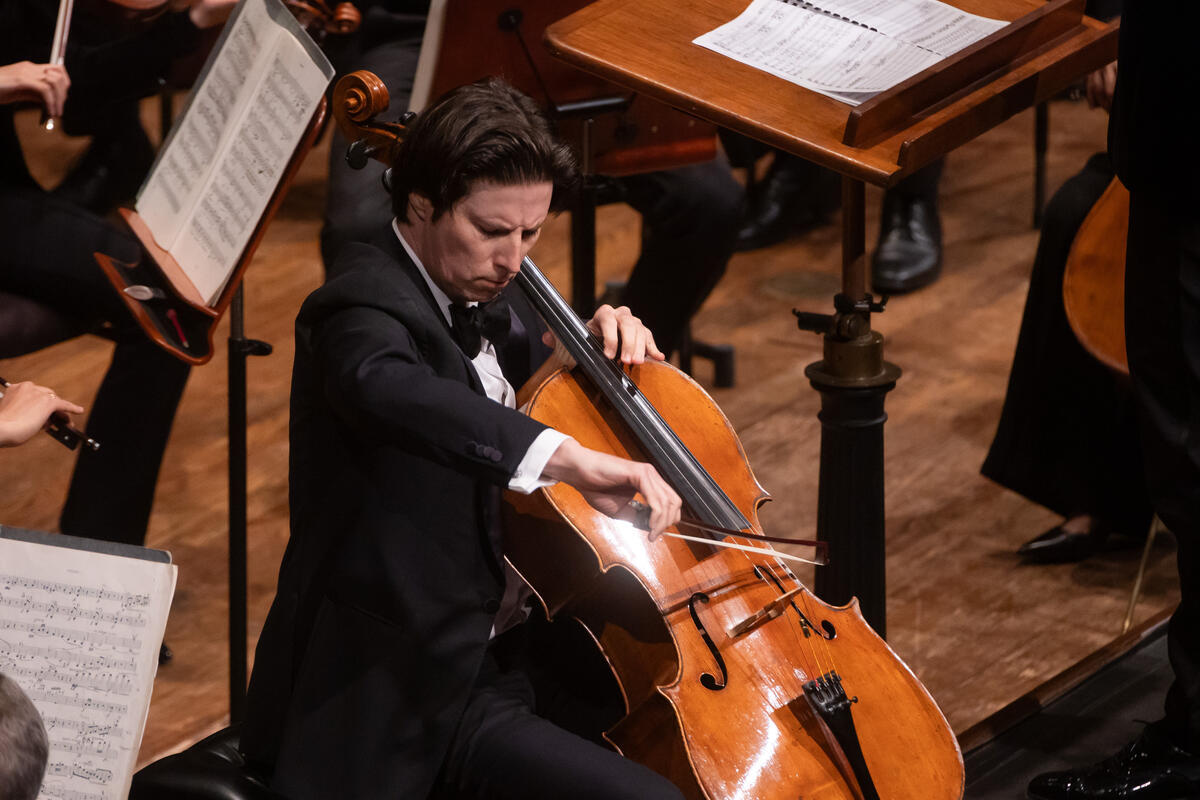 Daniel Muller-Schott
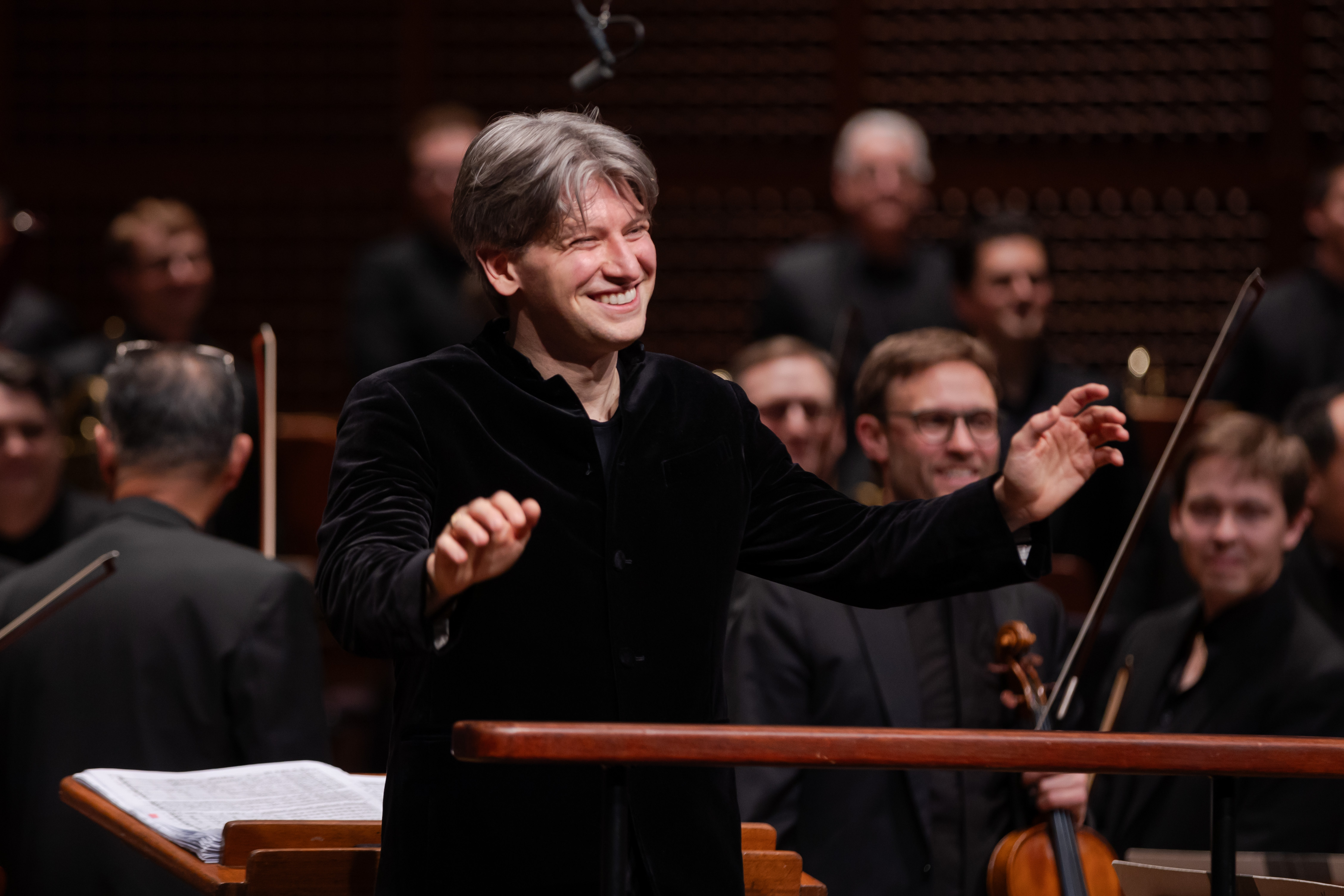 Daniele Rustioni, Conductor
 Leslie Friedman