Tag Archives: Opus 73

DVORAK & BRAHMS: A PERFECT NIGHT

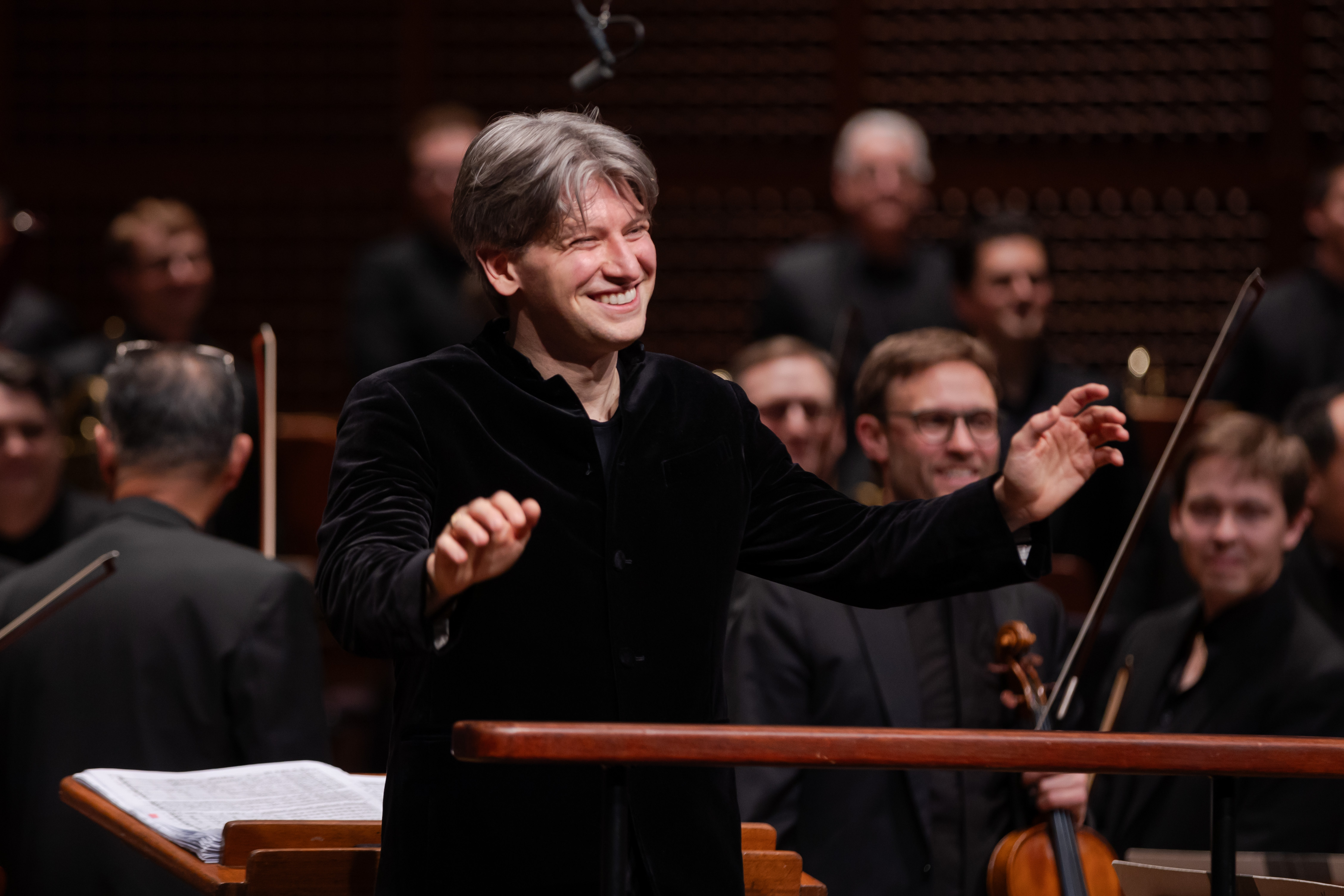
DAVIES SYMPHONY HALL, San Francisco, Friday, March 13, 2026 — Dvorak’s Cello Concerto in B minor, Opus 104. Brahms’ Symphony No. 2, in D major, Opus 73. The two great compositions were beautiful, totally original, complex. The works were performed by Daniele Rustioni, conductor, and cellist Daniel Mutter-Schott.  Rustioni conducts with every ounce of strength, mentality, and love for all of the music. Mutter-Schott masters this gorgeous Cello Concerto and that Concerto masters the cellist making his wonderful tone, his intellect trained on the music, and deep understanding of the complexity of Dvorak’s work.

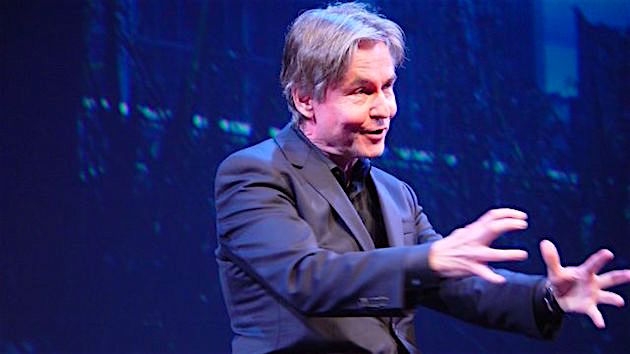
The San Francisco Symphony played the Cello Concerto with great heart. They followed Rustioni as he jumped, crouched over to look at a musician, reached out to the clarinets and then brought out the horn. It was something special to watch and listen to at the same time
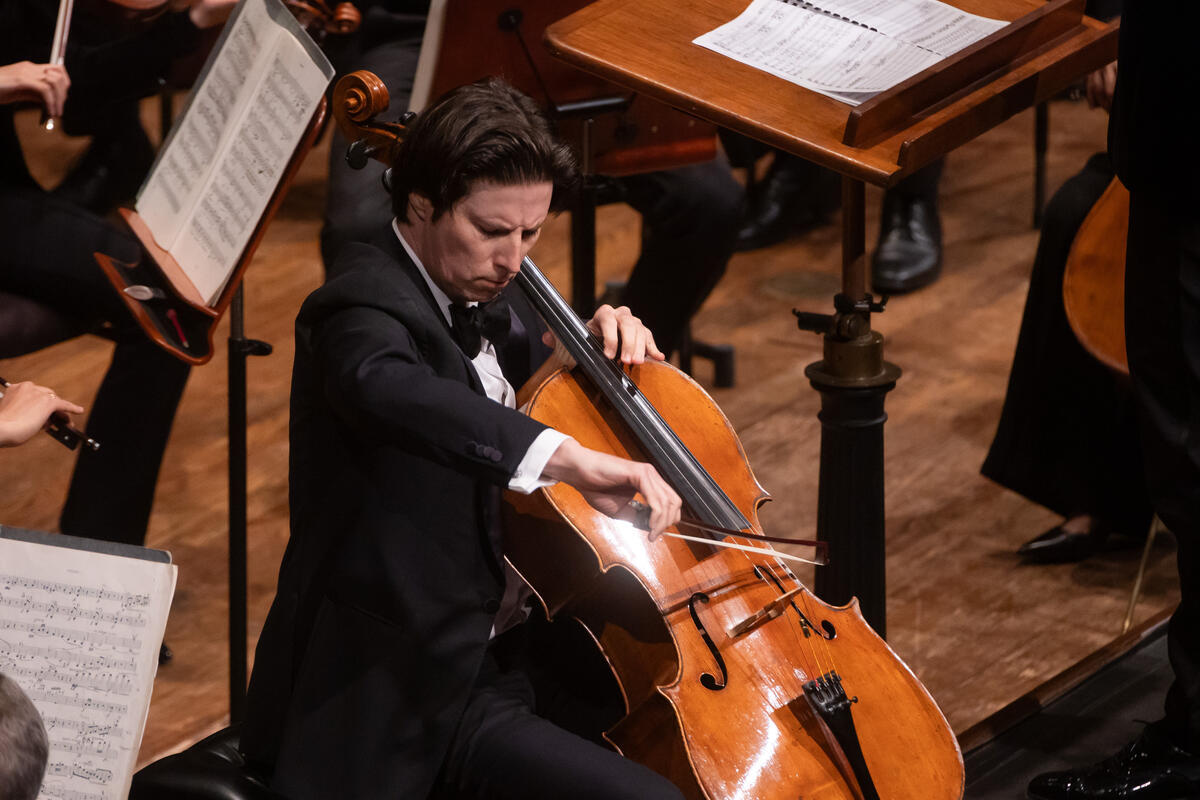
Daniel Muller-Schott

Both the Cello Concerto and Brahms’ Symphony No.2 included songs that the composers worked into the larger. In the Concerto, Dvorak used his song, Leave Me Alone (originally in Czech), Opus 82, no. 1. It was Josefina’s, his sister’s in law favorite song. During  the time Dvorak was completing the Cello Concerto, he learned that Josefina was very ill. Once he returned to Prague from America, she passed away. That emotional trial led him to change the the third movement, Finale: Allegro moderato. The Cello now also changes his mood to a more inward look. There are elements of folk-music and yet not any wildness. The cello becomes very quiet until is is silent. A forceful crescendo is taken up by the entire orchestra. And it is gone. Dvorak had loved Josefina but married her younger sister.

(Leave Me Alone: “Leave me alone with my dreams, do not disturb the rapture in my heart!…Leave me alone!…Do not ask about the magic that fills my, you cannot comprehend the bliss his love has made me feel…Leave me alone with my burden of passionate torment, of blazing ecstasy.”)

Brahms wrote the second symphony in a few months. He certainly composed it without the amount of struggle he lived with for his first. The Symphony No. 2 has been called “sunny” or pastoral; actually, it strikes me in a different way. The first movements, Allegro non troppo and then Adagio non troppo, felt stormy, threatening. Brahms wrote, “I would have to confess that I am a very melancholy person and that dark wings are constantly rustling above me.” I am aware that Brahms did not write music that makes a picture, vision, or story. However, the music can affect the listener. Brahms cannot get away from himself.Daniele Rustioni, Conductor
Symphony No. 2 in D major, Opus 73, is a miracle from Brahms. The opening movements are almost frightening and then Brahms gives us the sunshine.

His song, Wiegenlied (Lullaby) Opus 49, no.4, which was known to me as Brahms’ Lullaby when I was a very young person, is distributed in bits or pieces or given different harmony. Near the end of the movement, the Allegro non troppo soothes the music and now might briefly calm an adult. The second movement, Adagio non troppo struck me as Brahms’ most inward gaze. The third movement, Allegretto grazioso, plays as though on a school field, running and occasionally jumping. The orchestra has moved away from horns, violas, bassoons to the oboe, violins, woodwinds. We are moving out of our dark thoughts which took over for two movements and bits. The finale, Allegro con spirito, starts with the strings playing quietly, a contrapuntal harmony, the flute takes the stage, and the full orchestra and the brass welcome a happy day.

Brahms’ Lullaby

Lullaby, and good night, with pink roses bedight
With lilies o’er spread, is my baby’s sweet head
Lay thee down now, and rest, may thy slumber be blessed!
Lullaby, and good night, your mother’s delight
Shining angels beside my darling abide
Soft and warm is your bed, close your eyes and rest your head
Sleepyhead, close your eyes. mother’s right here beside you
I’ll protect you from harm, you will wake in my arms
Guardian angels are near, so sleep on, with no fear
Enjoy more lullabies to soothe the soul.

Photos by Brittany Hosea-Small, courtesy of San Francisco Symphony
 

IGOR LEVIT IGNITES DAVIES HALL; Part I, Beethoven

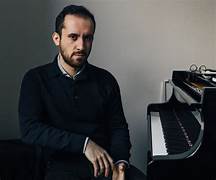
Igor Levit, the astonishing, internationally celebrated pianist, came to San Francisco for a two week residency with the San Francisco Symphony. He performed four different programs plus an open rehearsal. The last of the four was a recital with surprises throughout. It added up to eight performances. Each one was remarkable for Levit’s brilliance as a pianist, his deep knowledge of the repertoire, and his musical choices. The Hedgehogs attended three of the four: all Beethoven, June 17; Busoni’s immense piano concerto, June 22; a recital with works by Brahms, Fred Hersch, Wagner, and Liszt, June 27. We were unable to hear the chamber music concert with members of the SFS. It must have been very fine, but our three musical banquets were quite filling for hearing, seeing, and thinking. In fact, they were also entertaining. This is the first of three articles about Igor Levit’s performances.

Igor Levit describes himself as “Citizen. European. Pianist.”

The first concert series offered two of the most well known Beethoven masterpieces: the Piano Concerto No. 5 in E-flat major, Opus 73, called Emperor (1809), and the Symphony No. 3 in E-flat major, Opus 55, Eroica (1803). It was good to start our experience with Levit with music that is grand, complex, inventive and which we have heard before. I am not suggesting one could hum along, only that a listener’s memory might be able to imagine what Levit was doing with these landmarks of Western civilization.

He climbed inside the music. His partnership with the SF Symphony was a great match. The SFS, conducted by Music Director Esa-Pekka Salonen, played with strength and truth. It was not backing up the Visiting Artist; they were partners in creating their understanding of Beethoven’s music. As Levit stated in an interview with Corinna da Fonseca-Wolfheim in the SFS program book, “my goal is not to sound like Beethoven. What I do all day long is try to understand, why did Beethoven decide to write a piece this way and not the other way? But at the end of the day, I’m the one who plays it, not him. So, the goal is kind of to have it both ways.”

The “Emperor” concerto premiered, in 1809. Musicologists have considered it the apex or fulfillment of Beethoven’s “heroic era,” though this concerto came a year after the 1802-1808 noted as an era of prodigious creativity. Beethoven found a totally original way to open the concerto. The stunning beginning would awaken the audience to the realization that they were experiencing music presented in a new way, and they would need to listen in a new way, too.

Ludwig Van Beethoven, Composer (1770-1827)
The first movement is the longest Beethoven wrote. It is inventive in every facet. Curiously, it is the increasing presence of dissonance that serves as an audio seasoning and builds excitement. Beethoven then brings in quiet moments which stand out even more in contrast with the vigorous new movement. Levit let the Adagio un poco mosso run right into the final movement, Rondo: Allegro ma non troppo which became a frequent way to perform this concerto. The first movement is very long; this combination balances the music in real time. It spurs the music audibly onward and upward. The slower movement presents two chorales; first one for the piano, and then one in the orchestra. There is just a slight change of rhythm in the piano’s accompaniment. Being slightly off of the orchestra’s rhythm focuses the piano carrying the melody.

As Beethoven rounds the course he created for himself and the “Emperor,” he allows a breath of silence and lowers the pitch of the music. The finale allows a new theme to take a powerful bow in the appropriate tempo. Now, a Beethoven special: a romping German folk dance. The timpani takes over in another quiet moment, and there is an enormous burst of bright stars at the end.

Watching Levit perform is nearly so interesting as hearing him play. Fortunately, his quirks do not go on long enough to take attention away from the glorious music he makes. His first gesture was to hold up his left arm high and a little to the left with palm up but not flatly up. It seemed to express “there we are,” or maybe “this is the music right here.” His gestures and looks were often related to the music and his partners, Conductor Salonen and the SFS. He looked at the orchestra players either to acknowledge their playing or perhaps to send a mental message. He turned his head to see Salonen. Occasionally, he looked out to the audience and up to the audience in the choir loft as well. He leaned back to stretch his legs under the piano. Although one Bay Area writer observed that Levit was doing these motions because he felt so good about being in San Francisco, I saw him do the same exercises/expressions/quirks in a video of him performing the “Emperor” at the 2020 Nobel prize concert. It is him. Why would he pretend?

After many, many curtain calls, Igor Levit played one of Felix Mendelssohn’s Songs Without Words, Opus 30, “Consolation.” It was calming, quiet, heartfelt, beautiful. The audience, gasping, cheering, and applauding kept clapping, but he was gone for now. Mr. Levit’s residency was off to a tremendous start

Esa-Pekka Salonen, Music Director, San Francisco Symphony.

The San Francisco Symphony was stellar and brilliant performing the “Eroica.” Music Director/Conductor Salonen kept the orchestra in carefully ordered form. This symphony is written so that the audience cannot anticipate what will happen next in the music. Even though the “Eroica” keeps the classical form of four movements, what Beethoven does within the form is new. The second movement, “Marcia funebre: Adagio assai,” has the funereal feeling and pace. While this Symphony No. 3 was composed, Europe was on fire with revolutions and imperial wars. There would be many military burials and also soldiers with dire injuries visible in all towns. Conductor Salonen did not let the music sit in sadness. He kept it active and alive, as much the march, not only  a funeral. That approach meant that it was not a huge departure when the third movement, Scherzo: Allegro vivace, rushes on the scene. The music propels itself as though on quickly moving feet. At the final movement, the theme splits itself in two directions which grow into twelve variations. Multiple layers of music and multiple actions make an amazingly full, lively world. This is where Beethoven meant to go. The audience was treated to a fresh, exciting, Symphony No. 3. Salonen and the SFS made it new.