Tag Archives: Opus 77

Joshua Bell & The Academy of St. Martin in the Fields: Brilliant

Davies Symphony Hall, San Francisco, March 1st — Violinist Joshua Bell played majestically. He led the Academy of St. Martin in the Fields. His musicians assimilated the precision and passion of their leader. It was an amazing performance to see and hear the fine musicians demonstrating their live music; their lives are music.

The selections for the program were ideal. Charles Ives’ Variations on “America” was terrific. I am an Ives fan and had not heard this before. It is unusual for Ives as the tune of “America” is recognizable despite or because of the varying variations. His father taught him music; his music was for everyone in America. The father, George Ives, was “different.” He liked to have two bands march from different directions until they met in the center of town. The band leader, George Ives, would get a kick out of hearing music in different keys merge into the air.

From the brief but delightful piece of Ives, Bell took a dive into Johannes Brahms’ Violin Concerto in D major, Opus 77. This concerto is extremely difficult to perform and those difficulties make the listeners fascinated by Brahms and Bell. Watching Bell conduct his orchestra is a unique, physical wonder. To do it he must sit and twist his back to indicate which instruments he wants to play and how. His gestures involve his whole arm and sometimes the violin’s bow. He is in charge. The orchestra watches him, not occasionally but always. The first movement, Allegro non troppo, is expressive by changes. It begins with hints of folk-music origin, and then the key changes for the violin solo and the violin’s partner timpani. The long first movement has a cadenza that was composed by Joseph Joachim, the violinist, composer, and conductor. In the performance on March 1, the cadenza was written by Bell. Audience members stood to applaud the music and technique. The middle movement, Adagio, features a lovely oboe singing while the other winds dance in their harmonies. However, the oboe would bring the solo violin causing disarray and competition in the family.Then, they smooth out their problems.

The closing movement is described, Allegro  giocoso, ma non troppo. That “giococo” takes it  but with a joking kind of play. Brahms asks that it would not be too wild. This is the part of the concerto that my brain can replay — not when I want to turn it on — just when it wants to hear it again. This movement has faster rhythms and then faster than previously. It is a gift to hear the Brahms Violin Concerto in D major, Opus 77 played by Joshua Bell and conducted by Bell. Watching his exactitude and hearing the results, it is a gift.

I was very happy to hear these two Romantic composers – one from near the early era and the other near the close of it – on the same program. For a long time, I did not hear Robert Schumann, but recently he has been revived. To be rediscovered in Springtime is just right for Symphony No. 1 in B-flat major, Opus 38, Spring. The music begins with a fanfare and the movement  is Andante un poco maestoso – Allegro molto vivace. It is fitting for the time the leaves come up, but slowly, and then the flowers in bright colors appear and sway in the breeze. The Larghetto is beautiful. The program writer, Rene Spencer Saller, gives the reader this note: “it is the only movement that Schumann left nearly untouched during his long revision process.” The trombones and bassoons have their moments in the gentle Larghetto. The Scherzo changes to G minor. Somehow there was a suggestion in the Larghetto that something new is coming. The finale, Allegro animato e grazioso, brings back a brass fanfare. There are moments for soft horns, flute, and solo oboe. The finale designs a thrillingly, glorious happiness. Closing our thought of the Symphony dedicated to Spring; Schumann reminds us that there is something serious to remember: “I want to tell you that I would like to describe a farewell to spring, and therefore do not want it to be taken too frivolously.” *

*Schumann to conductor Wilhelm Taubert
SF Symphony: Brahms & Shostakovich

Davies Symphony Hall, San Francisco, March 30 — This was a great program. Brahms’ Violin Concerto in D Major, Opus 77 and Shostakovich’s Symphony No. 10 in E minor, Opus 93.

If you ever learn that Gil Shaham, violinist, is playing near you, someplace on this same planet, go to hear and see him. He was the guest soloist playing Brahms’ Violin Concerto in D major. He is a blissful musician and shares the bliss with his audience. As he played, he related to the conductor, Juraj Valcuha, and also turned toward the Concertmaster, Alexander (Sasha) Barantschik. It seemed that he wanted their experiences in the music to fit with each other so that they enjoyed making music together.

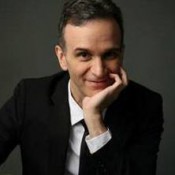
Gil Shaham, violinist,  He performs regularly with the Berlin Philharmonic, Boston Symphony, Chicago Symphony, Los Angeles Philharmonic, Orchestre de Paris, Israel Philharmonic. He has multi-year residencies with Montreal Symphony, Stuttgart Philharmonic, Singapore Symphony.

The Concerto is something different in Brahms’ repertoire and new to the late19th century audience for serious music. “Normally,” in concerti of the era, the orchestra was a frame for the music made by the soloist. The soloist dominated the two-some. In this concerto, they are equals. It also offers new, off-center rhythms that made the listeners at the 1879 premiere decide it was a strange Brahms, as though he had heard wisps of this music from E.T. The first movement has a lovely, lyrical method to carry through changes from major to minor and the presence of Hungarian folk tunes folded into this Allegro non troppo. I remember it, even when there are surprising switches, as a deep and moving quiet, moving like a river, not entirely moving like an emotion. This is where an Adagio oboe melody drifts through gentle but never weak, winds. The violin brings more musical strife and then it all becomes calm, but never still. The finale, Allegro giocoso ma non troppo (happy but not too happy) is obviously demanding over-the-top technical brilliance. Shaham was in clover. It was not a bit challenging to him as the full audience were thrilled.

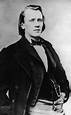
Johannes Brahms, composer (1833-1897)  This is the first Violin Concerto he wrote. He was pounced on by writers and music lovers. What had he done? He had made a great piece with new sounds and rhythms which were not welcomed. The reception rattled him so much that he destroyed his second violin concerto and never wrote another. Occasionally, I hear the finale movement of the Violin Concerto in D major on the radio, but not the whole concerto. It is a rare jewel. Shaham, Valcuha, and the SF Symphony gave it the performance it deserves.

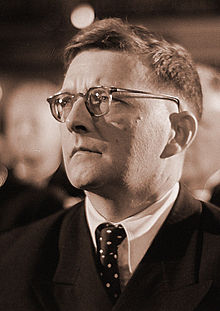
Dmitri Shostakovich, composer (1906-1975)

On one of my first visits to the San Francisco Symphony, I learned that they would not play anything by Shostakovich. It shocked me. The idea was that Shostakovich was a loyal Russian Communist, and therefore an enemy. Later, Leonard Slatkin was a guest conductor. He spoke to the audience and encouraged them to understand Shostakovich’s hunted life, and appreciate the greatness of his music. It surprises me now to note that some music writers still assume that Shostakovich was all about Communism and writing music that supported the current ideals. Some even treat the two times he had lost approval by Stalin’s regime was, “after all, only twice.” This is a great composer. He could not have his work performed. He could not work. He wrote for movies, and tried to be rehabilitated. He had to know that other artists had been sent to Siberia, which was a place to die, or, they were shot. When he was allowed to go to the US as an artist on display but with grim chaperones, he was reported to look like a prisoner speaking what he had to say. He was denounced by the authorities, lost his teaching positions, did not write between his Symphony No. 9, 1945, until the Symphony No. 10, 1953. What happened? Stalin died. So, the question about his Symphony No.10 in E minor, Opus 93 is whether the Symphony was specifically about Stalin. For myself, I think it is about Stalin, but not as a portrait of that dictator. The atmosphere, what there was to breathe, what to think, how not to think was all Stalin and his cohorts all the time. Shostakovich and other artists who lived in Stalin’s world had lives which were continually repressed by the entire regime. Shostakovich was there; his family and private life were constantly in danger.

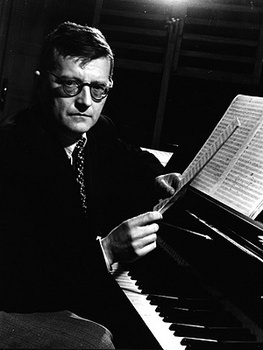
Shostakovich at the piano

The Symphony opens with the cellos and basses. Moderato, it has a sound lying under the music; that sound says, “Be careful. You may be watched.” The strings carry the movement forward to language from solo instruments: a clarinet solo, a horn fills the music, more clarinet, and a flute accompanying plucking strings. The whole orchestra builds its very loud cries, and the music becomes even louder. Briefly, it sounds like an army. The movement ends with piccolo and timpani. The listener, becoming anxious, catches her breath, but still the eyes open wide in the quiet but ghostly end. The second movement is an Allegro, like a super fast scherzo. It is rushing to the edge of the moon. Is someone running away? Is a whole nation running after…what? It pushes the heart of the music. There is no moment to think; the strings play very, very quietly. The scherzo abruptly cuts itself off. The third movement has three styles: Allegretto – Lento – Allegretto. It is not so fast as the Allegro, but runs briskly. Then, there are slower moments and a return to the brisk movement. There is a teasing, lively mood that has that under lying, troubling, secret sound. The piccolo, flute, timpani, and triangle present a sardonic tone as the music marches on. The Symphony ends with Andante – Allegro beginning similarly to the first movement’s cellos and basses. A lovely oboe almost calms the music as once again the flute flies solo. Now, the wildness of the second movement becomes an energetic, klezmer. It is at last a joyful sound for all of us.