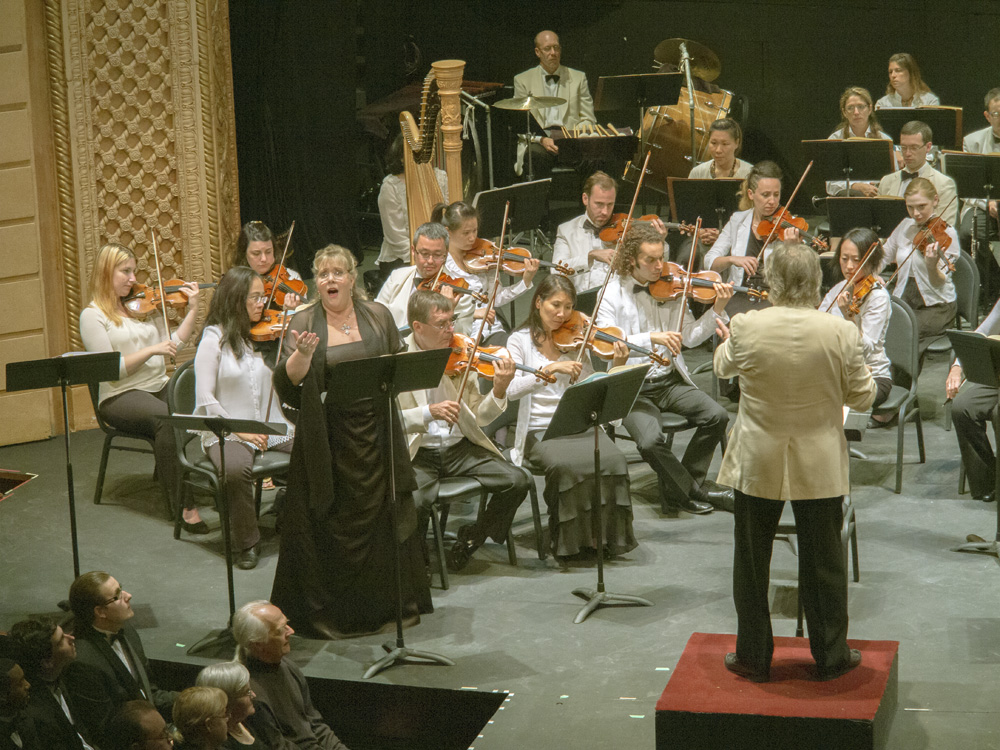
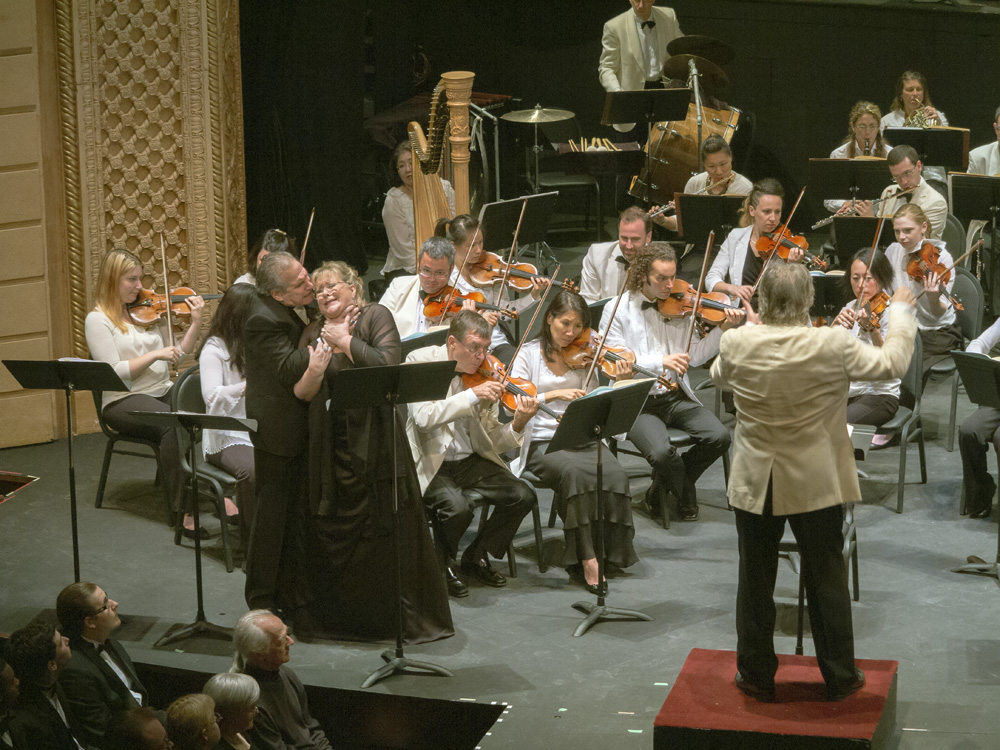
 The exquisite opera star, Ruth Ann Swenson, cast her delightful spell through the exquisite Weill Hall of the Green Music Center at Sonoma State University, yesterday, Sept. 29. Ms Swenson is a unique operatic artist. Her angelic voice is matched by her ability to embody a complete character in a song. She is ardent, bereaved, playful, flirtatious, prayerful, and even funny. In each, she is completely convincing. As this writer overheard, the audience was moved and deeply impressed. A music lover from New York commented, “I’ve never seen or heard a great opera singer so able to become a different role. Such an amazing range of theater plus great music.” Charles Calhoun, San Francisco’s distinguished choral director, commented, “She is such an artist. I am amazed at her gift to become these different characters, project different emotions.” Ms Swenson was accompanied by pianist Warren Jones. Mr. Jones demonstrated not only his sensitivity to the singer, but also his own musicianship. He performed Three Pieces from Op. 118, by Brahms, and three mazurkas, thought to be the last music written by Chopin. In both, Mr. Jones’ playing was a bonus gift to the audience. Greatly skilled; he plays with understanding of the music. He becomes a perfect partner for the composer as he is for the singer. Ms Swenson’s program opened with Bellini’s Il fervido desiderio/The Fervent Wish. She immediately captivated everyone with this declaration of love. Her selections from Verdi let the audience know that they must be prepared to experience all of life in a few minutes. She sang Verdi’s La Seduzione/The Seduction, a story of cruelty and grief. Stornello/Refrain posed an opposite tale of love, “Constancy of love is foolish…I’m fickle and I flaunt it!” The program had beautiful surprises. This writer had never heard Ms Swenson sing Richard Strauss. Her three selections by this great composer for sopranos were magnificent. Allerseelen/All Souls’ Day, nostalgic and lovely, Breit’uber mein Haupt, full of sensuous longing “I want only the darkness of your raven locks, and the radiance of your gaze,” and Zueignung, a stirring declaration of dedication. The necessary brevity of an online posting prevents longer descriptions of the astonishing enactment of Mozart’s Quanti mi siete intorno… Padre, germani, addio from Idomeneo. “How many of you ruthless murderers surround me?” Or the refined, alluring L’heure exquise, by Reynaldo Hahn. Now it is time for a confession. This writer has long had an allergic response to opera divas singing American popular songs. Great big voices singing something that Hoagy Carmichael or Cole Porter wrote for something entirely different normally does not work. Not good for the song. Not good for the great big voice. It was a revelation to hear Ms Swenson sing On Such A Night As This, by Barer/Martin; They Say That Falling In Love/My Romance by Berlin/Rodgers&Hart; Embraceable You by G & I Gershwin. Each had been arranged for Ms Swenson by Richard Riccardi. Each was a jewel. Her pristine diction brought out the wit and insight of the lyrics. Her beautiful voice, matched perfectly to the arrangements, revealed the beauty of these musical treasures. She sang them as Ruth Ann Swenson singing great songs (not as an opera star pretending to be Billie Holliday). Good for the songs, good for the singer, S’Wonderful! for the audience. She gave more of herself in Somewhere Over The Rainbow, her encore. Ms Swenson will offer classes at Sonoma State. One must hope that the powers that be at the Weill Hall, Green Music Center, bring her back to perform again. And again. Her career began at the San Francisco Opera. For many years she sang at the Met, in New York, and at the great operas around the world. While she is near, let’s celebrate her magnificent gifts. Hear Ruth Ann Swenson and Warren Jones on the recording i carry your heart, EMI Classics.

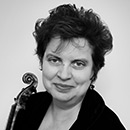

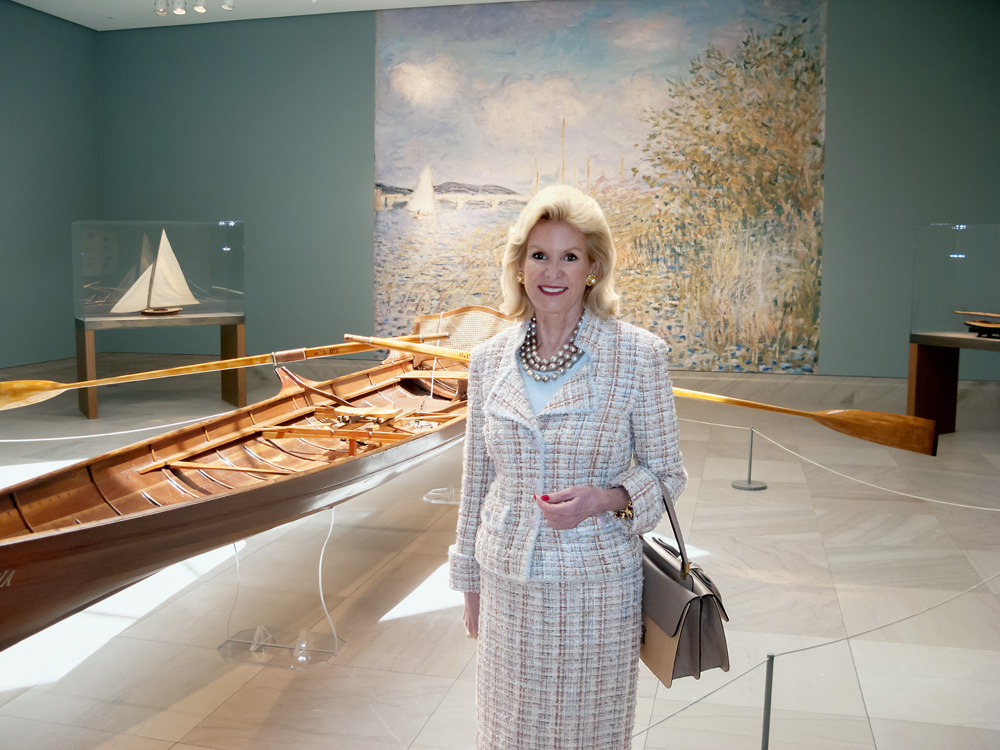



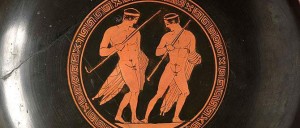 There is still time to view this fascinating exhibition at the Legion of Honor Museum, San Francisco. It closes June 23, 2013. The exhibition gathers art that grew from the Olympic ideal and from the Olympics themselves, both the ancient Olympics which happened every fourth year for 1000 years and the modern Olympics, revived in 1896. While you are there, remember to pick up the beautiful keepsake brochure that is offered (free!) on a rack in the gallery. It is illustrated with pictures of the rare, Greek coins, sculpture, golden laurel wreath and other art that tell the dramatic story. Written by curator Dr. Renee Dreyfus, it also offers amusing, historic, and inspiring commentary taken from ancient admirers of the athletes. The ancients started out with the religious belief that both art and athletics were gifts from the gods. Over time, the religious connection faded but admiration for the marvelous human body did not fade. Men in motion, yes, mostly men, motivated artists and philosophers to create tributes to specific athletes and particular sports. The coins show chariot races, foot races, wrestling, the discus. Fans of Olympic achievements will find so much to enjoy in this exhibition. They will also see how events changed over time. Wrestling in ancient times was done standing up. The winner was the one who threw his competitor to the ground three times. There were ancient competitions for women, commemorated in coins. They were not in the Olympic Games but in their own festival dedicated to the goddess Hera. The virgin competitors ran in separate categories according to their ages. Photos and posters of modern athletes and memorable Olympics such as the one in 1936 when Jesse Owens upset Hitler’s propaganda and 1972 when terrorists murdered Israeli athletes. Enthusiasm for the athletes is expressed by Lucian, 2nd century AD: “if you were seated among the spectators feasting your eyes on the prowess and stamina of the athletes, the beauty and power of their bodies, their incredible dexterity and skill, their invincible strength, their courage, ambition, endurance, and tenacity. You would never stop…applauding them.”Pictures:(Left)Curator Renee Dreyfus (Right) Red-figure kylix showing two athletes, Greek, Athens, 440-430 BC.