The San Francisco Symphony, with John Storgårds, Conductor, perform Outi Tarkiainen’s “The Rapids of Life,” (U.S. Premiere), Shostakovich’s “Piano Concerto No. 1” with Seong-Jin Cho, Piano, and Mark Inouye, Trumpet, and Beethoven’s “Symphony No. 5.” At Davies Symphony Hall on Thursday night, January 22, 2026.
January 24, 2026 — If you do not have a ticket, get it. Tonight’s the last chance. If you think “been there, done that,” get the ticket now. Maybe there are many conductors who conduct this Symphony; maybe they have their own way to do it. Come to Davies Symphony Hall. Hear it now. Conducted by John Storgards leading the San Francisco Symphony, each piece on the program was performed marvelously. Get that ticket.
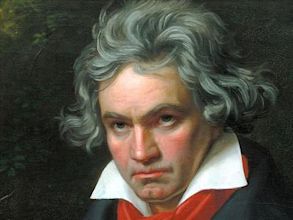 Ludwig van Beethoven, composer (1770 – 1827)
In the minutes before the Symphony No. 5 in C minor, Opus 67, began I felt jumpy, excited, anxious. When the first four notes played into my heart, I was captured by the music. What will happen? The rhythm beats the listener’s pulse. Allegro con brio, it opens each measure and finds that same music changed just a little, but it is always there. The first movement closes with the music building power and mystery. The second movement, Andante con moto, expands lyrically. Its music has decided to take deep breaths, gather its force, and, with the brass instruments moving in, the music is less insistent. However, that opening rhythm returns. The third movement, Allegro–, brings low strings and surprising horns, still in the C minor chord. The Symphony turns on its Scherzo and reaches the fourth movement, Allegro, gliding, fighting, climbing up a rocky hill. It is a struggle; the music will slide down and crawl back up. There is grave danger to get to the top and be able to stay there. In the third movement, I felt the tears. My heart wanted the triumph. It came battling, out of breath, but the music can breathe and stand surveying where it came from and where it can live.
For another interpretation of the 5th, look at this reviewer’s writing on Michael Tilson Thomas’s presentation in June, 2015. https://www.livelyfoundation.org/wordpress/?p=786

The San Francisco Symphony, with John Storgårds, Conductor, perform Outi Tarkiainen’s “The Rapids of Life,” (U.S. Premiere), Shostakovich’s “Piano Concerto No. 1” with Seong-Jin Cho, Piano, and Mark Inouye, Trumpet, and Beethoven’s “Symphony No. 5.” At Davies Symphony Hall on Thursday night, January 22, 2026.
The US premiere by composer Outi Tarkiainen had delicacy and power. The Rapids of Life is the title of her musical expression of giving birth. Ms Tarkiainen’s has previously performed her work with the SFS. This music uses many different instruments, a few are flutes, oboes, clarinets, and other “normal” symphonic instruments plus cymbal, gong, tam-tam, egg shakers, ratchet, glockenspiel, bowed vibraphone, and more. The composer was quoted, “the rapids of life I had to shoot – as a precipice over which I was pushed; and in the process I realized how little I knew about the strength of the human body.”

The San Francisco Symphony, with John Storgårds, Conductor, perform Outi Tarkiainen’s “The Rapids of Life,” (U.S. Premiere), Shostakovich’s “Piano Concerto No. 1” with Seong-Jin Cho, Piano, and Mark Inouye, Trumpet, and Beethoven’s “Symphony No. 5.” At Davies Symphony Hall on Thursday night, January 22, 2026.
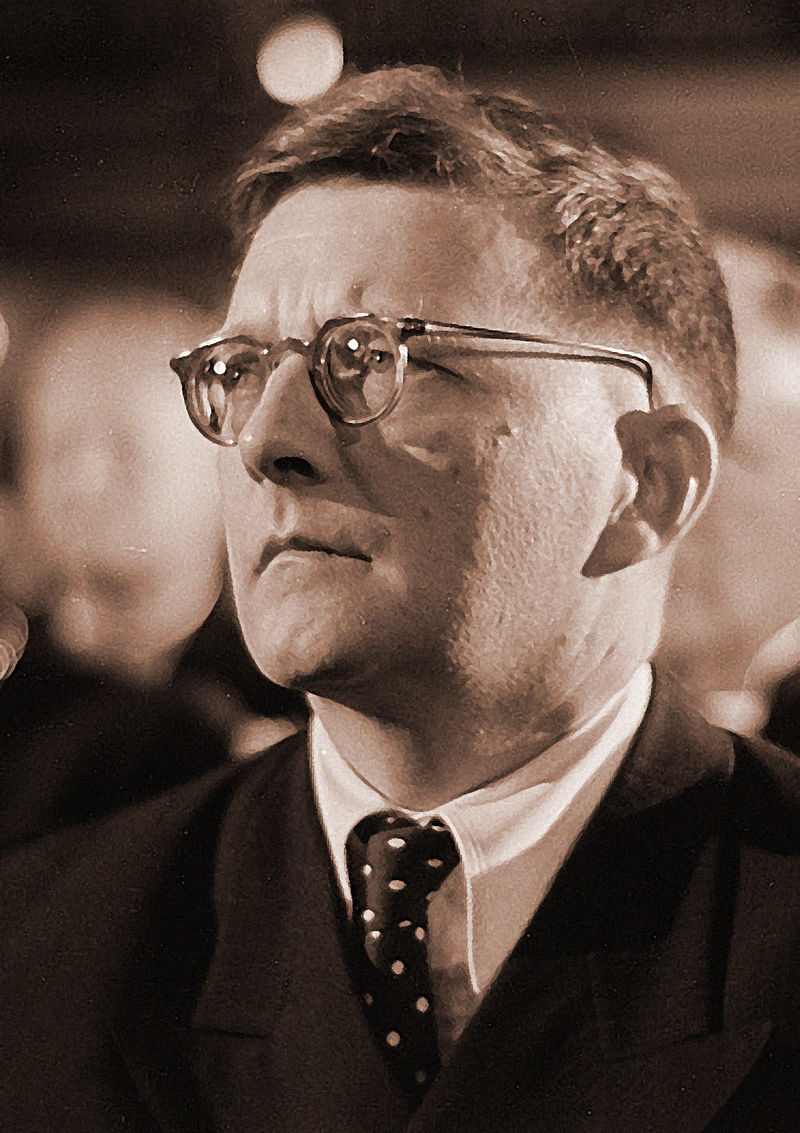 Dmitri Shostakovich, composer (1906 – 1975)
Piano Concerto No. 1 in C minor, Opus 35 is something entirely new if one mostly knows his music through his Symphonies. As a young guy he played at clubs, accompanied silent movies, and composed for revues. I have a teapot that plays “Tea For Two,” with Shostakovich playing the tune. He wanted to write a trumpet concerto but gave up the project which he said, maybe, that working with a trumpet was too hard. This concerto for piano still gives the trumpet a starring, comic role. As his own work in the symphonies is greatly inventive, in this concerto he quotes music from his own early work and Rossini’s William Tell; Al Jolson’s “California, Here I Come; an English folk song “Poor Mary;” Haydn’s Piano Sonata No.50; and Beethoven’s “Rage Over a Lost Penny;” and more. Despite the many quotations, Shostakovich uses them to fit the artful work he has done. Some of the work seems to be comic but only on a highly satirical – but not sour or critical – level. I love Shostakovich in so many ways, and this piece is totally original and interesting in hearing his universal understanding of music. One wishes Stalin could have let him alone; we would have both serious and lightly funny. This one wishes there had not been that era at all. Maybe I could find a teapot with him playing Piano Concerto No. 1.
The encore was by Bernstein’s “Rondo for Lifey.”
Photos by Stefan Cohen, by courtesy of San Francisco Symphony.